
Last updated September 24, 2026
Free written scope consultation - allowances, timeline, and change-order rules on paper before a single trade is scheduled







 Before
 After
After Before
 After
After Before
 After
AfterConstruction Warning Signs: A Mission Viejo Homeowner’s Reference Guide
A door that sticks seasonally is almost always normal wood movement. But a door that sticks only after rain, only at the bottom corner, and started within the past 12 months is one of the most reliable early indicators of foundation differential settlement in clay-soil conditions like those found throughout Mission Viejo’s hillside and canyon-adjacent neighborhoods. Most construction warning sign guides focus on dramatic failures - foundation heaving, roof collapse, walls separating from frames - yet the costliest problems in Mission Viejo homes announce themselves months or years earlier through specific, measurable early indicators that homeowners walk past daily. This guide catalogs those early signals, explains what they indicate structurally, and identifies the precise point where each one requires a licensed professional rather than continued observation.
Quick Answer
The most important construction warning signs in Mission Viejo homes are: differential foundation settlement (diagonal cracks from door corners, sticking doors that worsen after rain), moisture intrusion preceding visible damage (efflorescence on masonry, paint sheen changes, localized musty odors), roof ventilation failure visible from the ground (shingle buckling patterns, granule accumulation in downspouts), and electrical hazards requiring immediate evaluation (warm cover plates, aluminum wiring in pre-1973 homes, GFCI nuisance tripping). Document symptoms with dated photographs and a reference scale before calling a contractor - this record affects liability determinations under California’s 10-year latent defect statute. Our step-by-step guide to hiring a contractor in Mission Viejo explains what to verify before signing.
Table of Contents
- Foundation and Structural Warning Signs
- How to Distinguish Cosmetic Cracking from Structural Cracking
- Moisture Intrusion Indicators Before Visible Water Damage
- Roof Warning Signs Visible from the Ground
- Electrical Warning Signs: Monitor or Act Immediately
- What to Document Before Calling a Contractor
- Common Mistakes to Avoid
- When to Call a Professional
- Frequently Asked Questions
 Before
 After
AfterFoundation and Structural Warning Signs
Mission Viejo sits on a geological layer cake. The flatlands and lower slopes rest on marine sedimentary deposits with significant clay content. The hillside neighborhoods above Oso Parkway and along the eastern ridgeline have cut-and-fill pads over bedrock. These two soil types fail differently, and the warning signs differ accordingly.
Clay-soil settlement indicators (flatlands and lower Mission Viejo):
The clay soils in lower Mission Viejo expand when wet and contract when dry. This seasonal movement is normal. Differential settlement - where one part of the foundation moves differently from another - is not. The critical distinction is pattern and progression.
A door that sticks in August and frees up in January is following the moisture cycle. A door that began sticking within the past year, only at the bottom corner, and only after rain, suggests the foundation edge beneath that corner is settling into seasonally softened soil. The gap will be wider at the top of the door frame than the bottom, and the door will resist closing on the latch side.
Other clay-soil warning signs:
- Diagonal cracks in interior drywall running from the upper corner of a door or window frame toward the ceiling, typically 1/16 inch or wider
- Baseboard pulling away from the wall at interior corners, with the gap wider at the floor than at waist height
- Tile floors cracking in a straight line that continues across multiple tiles, indicating slab movement rather than individual tile failure
- Exterior concrete walkways tilting toward the foundation after rain, suggesting soil consolidation beneath the slab
Hillside and cut-and-fill indicators (upper Mission Viejo, ridgeline homes):
Homes built on filled or graded slopes face different failure modes. The fill material may consolidate over decades. Retaining walls may tilt or crack. The warning signs include:
- Stepped cracking in exterior stucco following mortar joints, particularly on wing walls or retaining walls
- Windows that become progressively harder to operate, with the sash frame racking into a parallelogram shape
- Garage doors that no longer seal evenly against the threshold, with one corner lifting
- Exterior doors that scrape at the threshold on one side only, indicating slab tilt rather than uniform settlement
The measurement threshold that separates observation from action: cracks wider than 1/8 inch, or any crack that grows more than 1/16 inch in a six-month period, warrants a structural evaluation. Under Clause 1 of the Haven Standard, Rowan Construction Group provides a written evaluation with photographic documentation before any repair is proposed.
How to Distinguish Cosmetic Cracking from Structural Cracking
Stucco and drywall crack for dozens of reasons. Hairline cracks at tape joints are nearly universal in California homes and mean nothing structurally. The patterns that indicate underlying failure are specific and repeatable.
Crack pattern identification:
| Crack Pattern | Location | Structural Meaning | Action Threshold |
|---|---|---|---|
| Horizontal | Stucco, mid-wall, often above grade | Lateral pressure on foundation or inadequate shear wall | Any horizontal crack wider than 1/16 inch |
| Stair-step | Stucco or masonry, following mortar joints | Differential settlement; one side of wall dropping relative to other | Step displacement exceeds 1/8 inch |
| Diagonal from corner | Drywall above door/window frames | Foundation settlement or inadequate header support | Width exceeds 1/16 inch or grows in 6 months |
| Vertical, straight | Drywall at tape joints, stucco at control joints | Shrinkage, thermal movement, normal curing | Cosmetic unless widening |
| Spider web / map cracking | Stucco surface only | Improper mix, over-troweling, or moisture behind stucco | Indicates moisture issue if accompanied by soft substrate |
The measurement matters. A 1/32-inch crack is a paint issue. A 1/8-inch crack is a structural issue. Between those values, progression determines urgency. Photograph the crack with a ruler or coin for scale. Note the date. Re-measure in 90 days.
In Mission Viejo’s 1970s and 1980s tract construction, we regularly see a specific failure mode: inadequate foundation depth on hillside lots where fill was not fully compacted. The resulting settlement produces diagonal drywall cracks above interior door frames, typically appearing 15-25 years after construction. The pattern is so consistent that we can often predict which wall in a given floor plan will show it first.
Rowan Construction Group Mission Viejo home evaluations include a crack mapping protocol - each crack is photographed, measured, and plotted on a floor plan so progression can be tracked objectively rather than by memory.
Moisture Intrusion Indicators Before Visible Water Damage
By the time water stains appear on drywall, the damage behind the wall is typically extensive. The earlier indicators are subtle but detectable if you know what to look for.
Efflorescence on masonry and concrete:
Efflorescence is the white, powdery deposit that appears on brick, concrete, or stucco surfaces. It is salt left behind when water evaporates - water that came from inside the wall or slab, not from rain on the surface. In Mission Viejo’s climate, where rainfall is concentrated in winter months and evaporation is rapid the rest of the year, efflorescence on a south-facing wall in July is a significant finding. The water source is persistent enough to overcome eight months of drought.
Check for efflorescence at:
- Foundation walls in crawl spaces or at exterior grade
- Retaining walls, particularly where soil is irrigated on the uphill side
- Concrete patio slabs adjacent to the foundation, especially where a downspout terminates nearby
- Stucco at window sills and door thresholds
Paint sheen changes on exterior walls:
Stucco that has absorbed moisture behind it dries differently than dry stucco. The paint film becomes slightly chalky or matte in patches. This is often visible only in raking light - early morning or late afternoon, standing at an angle to the wall. The patch may be several feet across and show no other symptoms. It indicates that the moisture barrier (building paper or house wrap) has failed at that location, and water is migrating through the stucco from the framing cavity.
In Mission Viejo’s 1990s construction boom, we see this pattern frequently on second-story walls beneath window assemblies. The integrated flange windows of that era were often installed without proper sill pan flashing. Water enters at the joint, runs down the framing, and exits through the stucco months later. The paint sheen change precedes visible staining by one to three years.
Persistent localized musty odor:
A musty smell confined to one room, closet, or wall cavity indicates active moisture and likely mold growth. The critical distinction is localization. Whole-house mustiness suggests HVAC or lifestyle factors. A smell that hits you when you open a specific closet, or that is strongest in one corner of a bedroom, points to a construction defect.
Common Mission Viejo sources:
- Condensate drain lines from attic air handlers that terminate inside wall cavities rather than to exterior
- Shower pan membrane failures in second-floor bathrooms, with water tracking along joist bays
- Improperly flashed deck-to-wall connections in homes with second-story decks over living space
- Irrigation spray patterns that hit stucco walls daily, saturating the substrate over years
The documentation protocol: note the room, the specific location where the odor is strongest, the time of day, and whether it worsens after rain or HVAC operation. This pattern information directs the investigation more efficiently than a general complaint of “musty smell.”
Roof Warning Signs Visible from the Ground
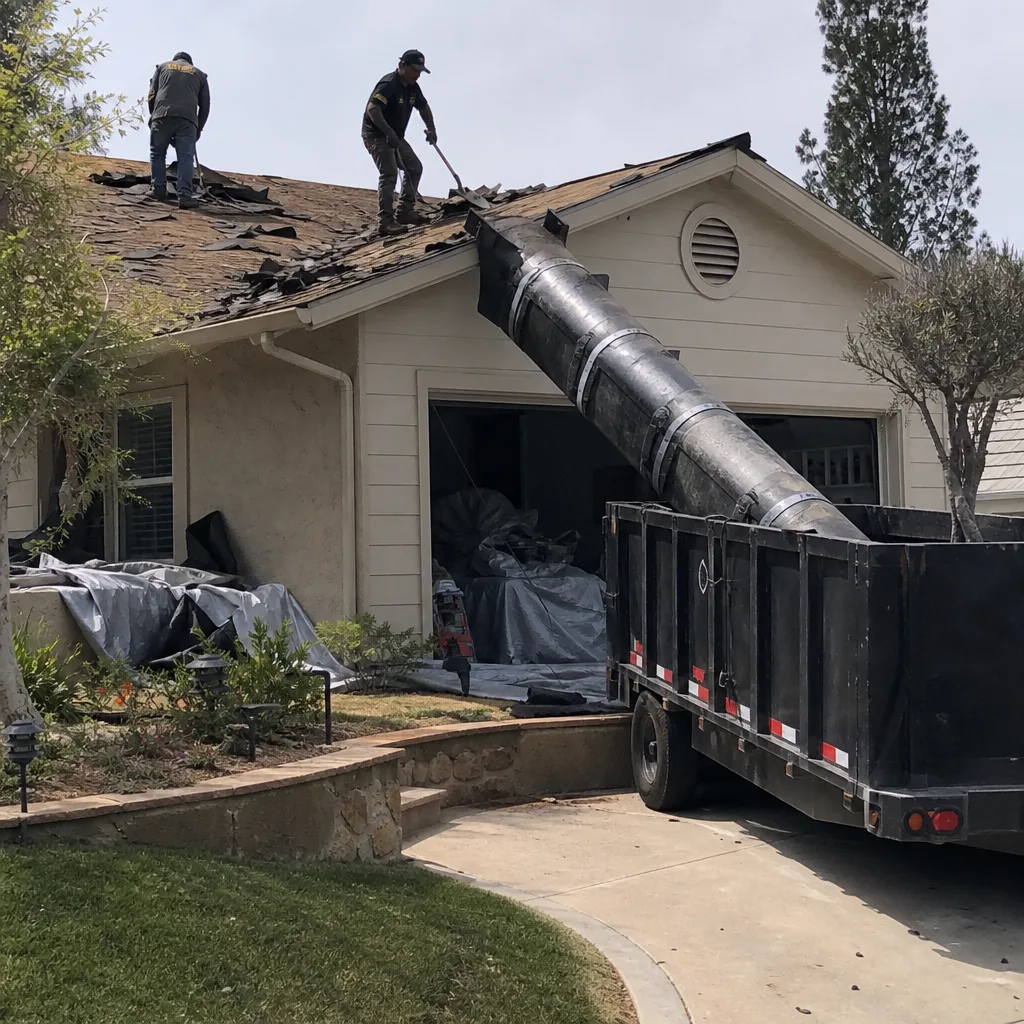
Mission Viejo’s combination of strong sun exposure, occasional Santa Ana wind events, and concentrated winter rainfall creates specific roof failure patterns. Most critical indicators are visible without climbing.
Granule accumulation in downspout outlets:
Asphalt shingles shed granules throughout their life, but accelerated loss indicates the asphalt binder is breaking down. Check the ground beneath downspout outlets after rain. A handful of granules is normal. A pile that covers your palm suggests the shingle surface is nearing end of life. In Mission Viejo’s UV exposure, this typically occurs at 18-22 years for standard architectural shingles, and 25-30 years for GAF Timberline HDZ or Owens Corning Duration products.
Granule loss is not merely cosmetic. The granules protect the asphalt from UV degradation. Once they’re gone, the shingle deteriorates rapidly. We’ve replaced roofs in Mission Viejo’s older neighborhoods where the asphalt core was exposed and cracking within three years of heavy granule loss.
Visible daylight at eave gaps:
From the ground, look up at the eave line on a sunny day. You should see a solid soffit surface. If light is visible between the soffit and the fascia, or through gaps in the soffit material, two problems may exist: the soffit venting may be compromised (reducing attic airflow), and the gap may admit wind-driven rain directly to the rafter tails and top plate.
In Mission Viejo’s 1980s and 1990s construction, we regularly find that original plywood soffits have delaminated at the edges, creating gaps that appear from below as light lines. The repair is straightforward - soffit replacement with vented aluminum or vinyl panels - but the delay allows moisture accumulation in the eave framing.
Shingle buckling pattern indicating ventilation failure:
This is the most specific ground-visible indicator. When attic ventilation is inadequate, summer heat builds in the attic space. The shingles overheat from below. The result is a characteristic pattern: shingles that appear wavy or buckled in straight lines corresponding to the roof sheathing panel joints. The pattern is regular, repeating every 4 or 8 feet, and is most visible in mid-afternoon when thermal expansion is greatest.
This pattern is common in Mission Viejo’s 1990s homes, which were often built with minimal soffit venting and no ridge vents. The buckling is not a shingle defect - it is a ventilation defect. Replacing the shingles without correcting ventilation guarantees recurrence.
Other ground-visible indicators:
- Flashing that has lifted or separated from the wall, visible as a metal edge catching light at an angle
- Chimney cricket (the small roof behind a chimney) that appears to sag or hold debris
- Valley lines that no longer appear straight, indicating sheathing deterioration beneath
- Exposed nail heads on ridge caps, where sealant has failed and nails are backing out
Roofing in Mission Viejo evaluations from Rowan Construction Group include attic ventilation calculation per IRC R806 requirements, with the math shown in the written quote.
Electrical Warning Signs: Monitor or Act Immediately
Electrical hazards can escalate rapidly. Some symptoms allow brief observation; others require immediate disconnection and professional evaluation.
Immediate-action indicators:
A warm cover plate on any switch or outlet is never normal. The plate should be at ambient temperature. Warmth indicates a loose connection, overloaded circuit, or failing device generating resistance heat. Turn off the breaker and call a licensed electrician. Do not use the outlet until evaluated.
Similarly, any burning smell, buzzing sound, or visible arcing (sparks when plugging or unplugging) requires immediate shutdown. These are pre-fire conditions.
GFCI nuisance tripping:
A GFCI (ground-fault circuit interrupter) that trips repeatedly without an obvious cause - a hair dryer, power tool, or outdoor extension cord - indicates either a ground fault in the circuit wiring or a failing GFCI device. The diagnostic distinction: if the GFCI trips with nothing plugged in, the fault is in the wiring or the device itself. If it trips only under load, the appliance may be at fault.
In Mission Viejo homes built 1987-1993, we see a specific pattern: GFCI receptacles installed as the first device on a circuit, protecting downstream standard outlets. After 20-30 years, the GFCI mechanism wears out and begins nuisance tripping. Homeowners often replace the GFCI repeatedly without realizing the downstream wiring may have developed a ground fault. A licensed electrician should test the entire circuit with a leakage current tester.
Aluminum wiring indicators in pre-1973 homes:
Mission Viejo’s first construction wave, 1967-1973, included thousands of homes with aluminum branch-circuit wiring. Aluminum expands and contracts more than copper under thermal cycling. Over decades, connections at outlets, switches, and panels loosen. The warning signs:
- Outlets or switches that feel warm during use
- Lights that flicker when a major appliance cycles on the same circuit
- Visible corrosion at outlet terminals (requires removing the cover plate - do this only if comfortable, with the breaker off)
- Breaker panels labeled Federal Pacific or Zinsco, which have documented safety issues independent of wiring type
Aluminum wiring is not automatically a fire hazard. But it requires specific termination methods - COPALUM crimp connectors or AlumiConn pigtails - that a general contractor cannot legally perform. This work requires a licensed electrician. Rowan Construction Group coordinates this trade as part of whole-home remodels, with the electrician’s scope written into the project quote. See our DIY vs Professional Construction guide for Mission Viejo homeowners to understand which tasks require licensed trades.
Monitor-only indicators:
A single light flicker during Santa Ana wind conditions is typically utility-side voltage fluctuation. Occasional dimming when the AC compressor starts is normal inrush current. A breaker that trips once and then holds for months may have encountered a transient overload. These warrant awareness, not immediate action, unless they become frequent or progressive.
What to Document Before Calling a Contractor
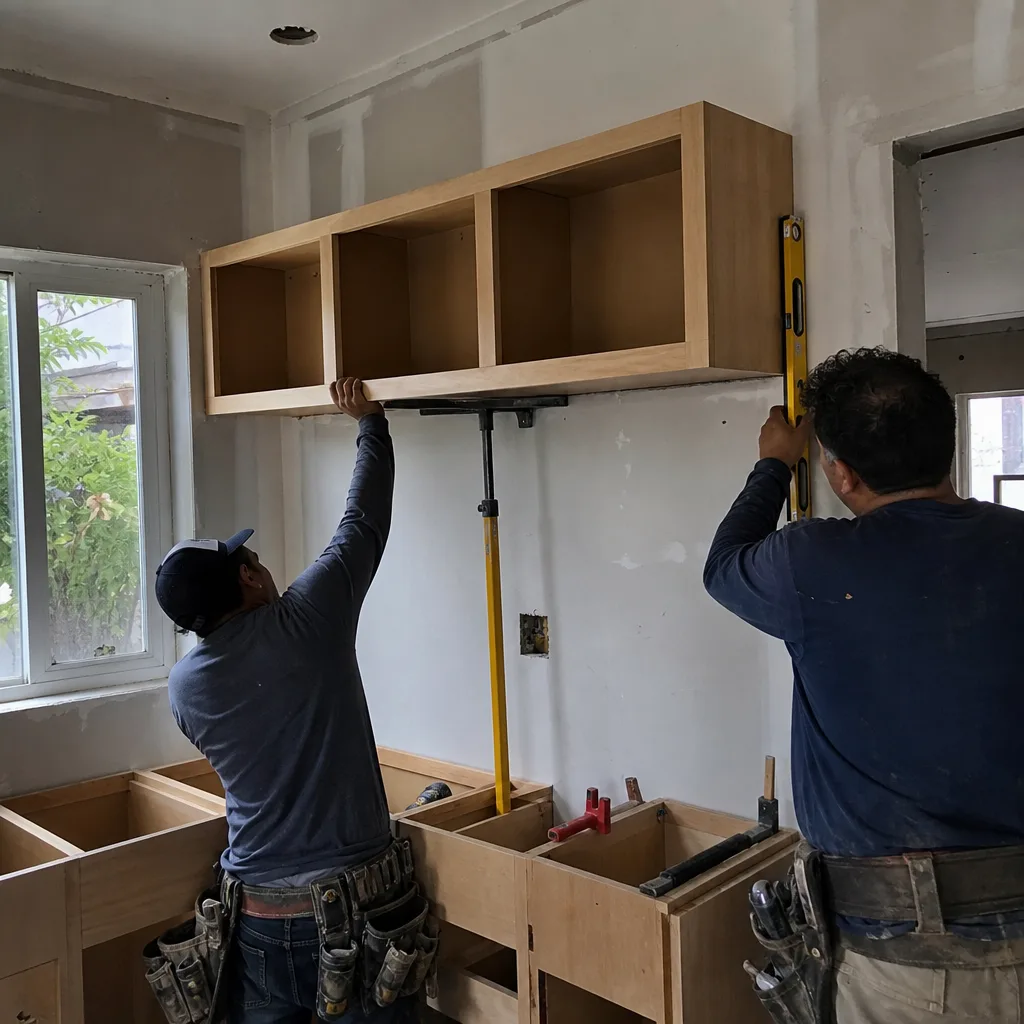
The quality of your documentation directly affects the accuracy of the contractor’s diagnosis and, if the issue becomes a legal matter, your position under California’s construction defect statutes.
Photographing cracks with reference scale:
A photograph of a crack without scale is nearly useless. Place a ruler, tape measure, or common coin (quarter = 0.955 inch diameter) directly adjacent to the crack. Photograph perpendicular to the surface, not at an angle. Include surrounding context - the full door frame, the wall corner, the window assembly - so the crack location is unambiguous.
For progressive cracks, photograph from the same position with the same reference object. Date every photograph. Store in a dedicated folder, not mixed with general photos.
Noting symptom appearance dates:
Memory is unreliable. Write down:
- First date you noticed the symptom
- Any event that coincided - heavy rain, earthquake, nearby construction, HVAC service
- Progression: same, worse, or intermittent
- Seasonal pattern: worse in summer, worse after rain, etc.
Why documentation affects liability:
California Civil Code § 895 defines a “structural defect” with a 10-year statute of repose for latent defects. The clock starts at substantial completion of the original construction. For Mission Viejo homes built in the 1990s, this statute has expired. For homes built 2015 or later, it may still be in effect.
However, the statute requires that the defect be “latent” - not discoverable through reasonable inspection at the time of purchase. Your documentation establishes when the defect became discoverable. A crack that appeared six months after purchase, documented with dated photographs, supports a claim that the defect was latent at closing. The same crack, undocumented and first mentioned five years later, is harder to position.
For remodel and repair work, Rowan Construction Group’s documented photo record on every visit creates a contemporaneous record of conditions found and work performed. Browse our more guides & resources for additional homeowner checklists. This is included as standard, not an upgrade, under the Haven Standard. The customer receives the photo set at project completion.
Common Mistakes to Avoid
- Monitoring a crack without measuring it. “It’s about the same” is not data. A crack that grows from 1/16 inch to 3/32 inch in a year is accelerating, even if it still looks small. Measure with a feeler gauge or ruler, record the number, and re-measure on a schedule.
- Assuming new construction is defect-free. Mission Viejo’s 2015-2022 construction boom included homes built during material shortages and labor crunches. We’ve found missing flashing, unsealed penetrations, and inadequate attic ventilation in homes less than five years old. The 10-year latent defect statute applies to these properties.
- Waiting for “more evidence” before calling about moisture. Musty odors, efflorescence, and paint sheen changes are the evidence. By the time drywall stains appear, framing damage and mold growth are typically established. Early intervention costs less and preserves more original material.
- Treating all cracks as structural emergencies. Hairline vertical cracks at drywall tape joints, particularly in homes less than five years old, are normal curing. Calling a structural engineer for every crack wastes money and creates unnecessary anxiety. Learn the patterns in the table above, measure, and escalate based on width and progression.
- Ignoring roof symptoms until leaks appear. In Mission Viejo’s climate, a roof can deteriorate significantly before water enters the living space. Attic insulation absorbs the initial leakage. By the time the ceiling stains, the sheathing may be compromised and insulation contaminated. Ground-visible indicators precede leaks by years.
- Attempting electrical diagnosis beyond visual inspection. Removing a cover plate to check for aluminum wiring is reasonable if you shut off the breaker first. Testing circuits, replacing devices, or opening the panel requires a licensed electrician. The hazard is electrocution and fire, not just incorrect repair.
- Accepting verbal estimates for structural or moisture issues. Under Clause 1 of the Haven Standard, Rowan Construction Group delivers a written price with a written scope before any work begins. “We’ll figure it out as we go” is not a plan for foundation or moisture remediation. The unknown-scope model invites cost escalation.
When to Call a Professional
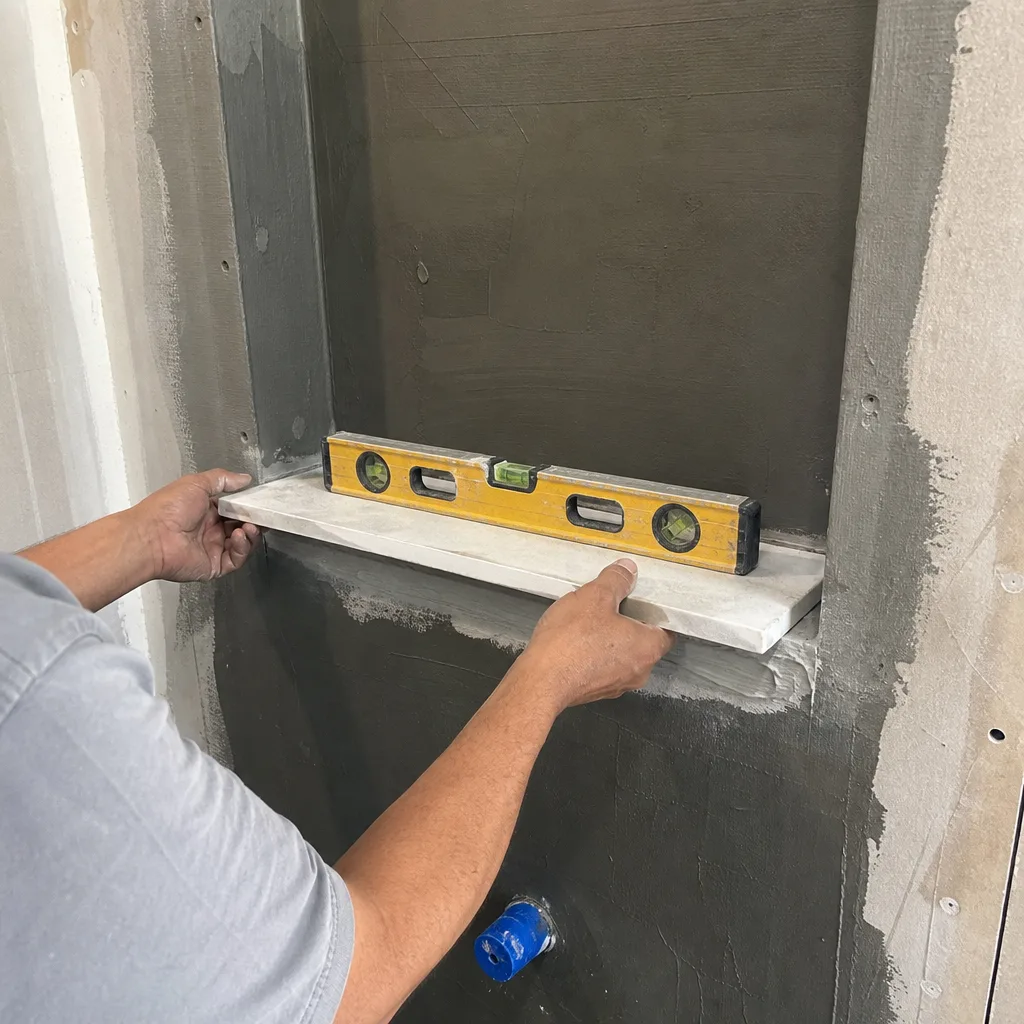
Call a licensed contractor or specialist when: any crack exceeds 1/8 inch or grows measurably in 90 days; a door or window becomes inoperable or shows frame distortion; you observe efflorescence, paint sheen changes, or localized musty odors; roof shingles show buckling patterns or granule loss accelerates; any electrical device feels warm, smells of burning, or arcs; or you suspect aluminum wiring or a Federal Pacific / Zinsco panel.
For foundation, structural, or moisture concerns in Mission Viejo, Rowan Construction Group provides evaluations with written findings and, if repair is indicated, a flat written price before any work begins. The 365-Day Done Right Promise applies to all work. Call (657) 297-4635 to schedule your free estimate.
Frequently Asked Questions
Foundation crack repair in Mission Viejo typically ranges from $2,800 for epoxy injection of a single structural crack to $15,000-$35,000 for underpinning or pier installation on a settling corner. The price depends on crack width, accessibility, and whether the repair requires soil stabilization or drainage correction. Rowan Construction Group provides a written line-item quote after evaluation, with no work proceeding until the price is agreed in writing. Call (657) 297-4635 for a free estimate.
You can make a strong preliminary assessment using the pattern, width, and progression rules in this guide: diagonal cracks from door corners, stair-step cracks in masonry, and any crack exceeding 1/8 inch or growing over time are structural until proven otherwise. Final determination requires a licensed contractor or structural engineer. Rowan Construction Group includes crack mapping and measurement in our evaluation protocol, with photographs provided to the homeowner.
At Rowan Construction Group, no. Under the Haven Standard, the written price is binding for the agreed scope. If concealed conditions are found - rot behind a wall, for example - work stops, the condition is photographed, and a signed change order with a new written price is required before work resumes. This discipline is why our projects finish within a few percent of the original agreed price across 4,000-plus jobs since 2007.
California’s 10-year statute of repose for latent structural defects runs from substantial completion of the original construction. For defects that are not latent - visible through reasonable inspection - shorter limitations may apply. Document your symptoms with dated photographs to establish when the defect became discoverable. Rowan Construction Group’s photo record protocol, included on every visit, creates contemporaneous documentation for homeowners.
Localize the source: note the exact spot where the odor is strongest, whether it worsens after rain or HVAC operation, and whether the wall or floor feels cooler than adjacent surfaces. Photograph any visible staining or efflorescence. Then call a contractor with this information - it directs the investigation efficiently. Moisture intrusion in Mission Viejo’s climate rarely resolves itself and typically worsens as the source continues.
Yes. Rowan Construction Group pulls all required permits and schedules inspections for work that triggers permit requirements under the California Building Code and Mission Viejo municipal amendments. The permit status is tracked in the project documentation, and inspection sign-offs are included in the final photo record delivered to the homeowner. Permits are not optional - unpermitted structural, electrical, or plumbing work creates liability and resale complications.
Homes built 1967-1973 in Mission Viejo are in the at-risk period. With the breaker off, remove an outlet or switch cover plate. Aluminum wire is silver-colored and marked “AL” or “ALUMINUM” on the insulation. Do not touch bare conductors. If you find aluminum wiring, or if you have a Federal Pacific or Zinsco panel, contact a licensed electrician for evaluation. Rowan Construction Group coordinates electrical remediation as part of whole-home projects, with the electrician’s scope and price written into the project quote.
The Bottom Line
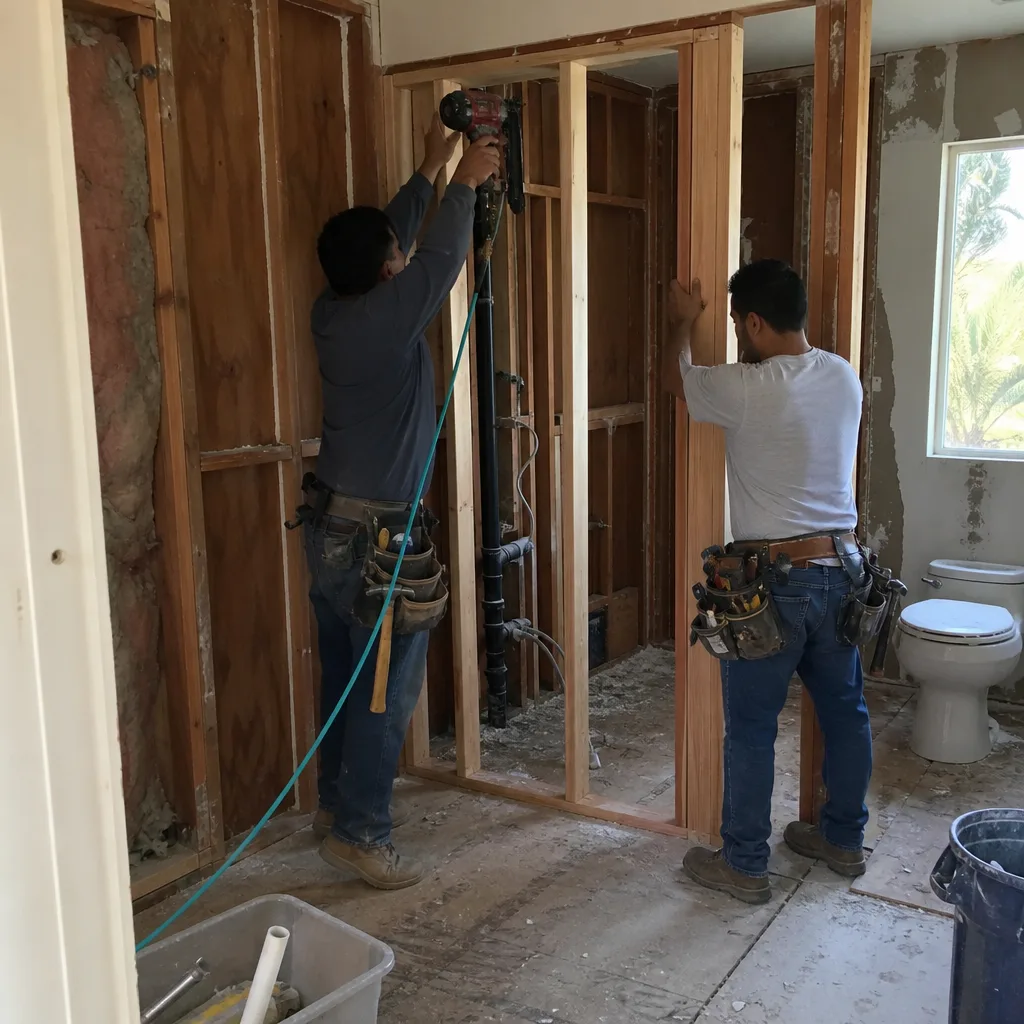
The costliest construction problems in Mission Viejo homes do not arrive as sudden catastrophes. They announce themselves through specific, measurable early indicators - a door that sticks at the bottom corner after rain, efflorescence on a south-facing wall in July, granules piling beneath a downspout, a warm outlet cover. The homeowner who learns these patterns, documents them with dated photographs and reference scales, and understands the thresholds that separate observation from action, saves thousands in prevented damage and gains leverage in any subsequent dispute. The key disciplines are measurement, documentation, and knowing when a licensed professional’s evaluation is warranted. For foundation, structural, moisture, roofing, or electrical concerns in Mission Viejo, Rowan Construction Group provides evaluations with written findings and flat written pricing before any work begins. The 365-Day Done Right Promise, the documented photo record, and the Free Second Opinion on any written estimate are standing offers - because Clause 1 of the Haven Standard is the whole point.
Written by Grant Rowan, Owner at Rowan Construction Group Mission Viejo, serving Mission Viejo since 2007.