
Last updated September 24, 2026
Free written scope consultation - allowances, timeline, and change-order rules on paper before a single trade is scheduled
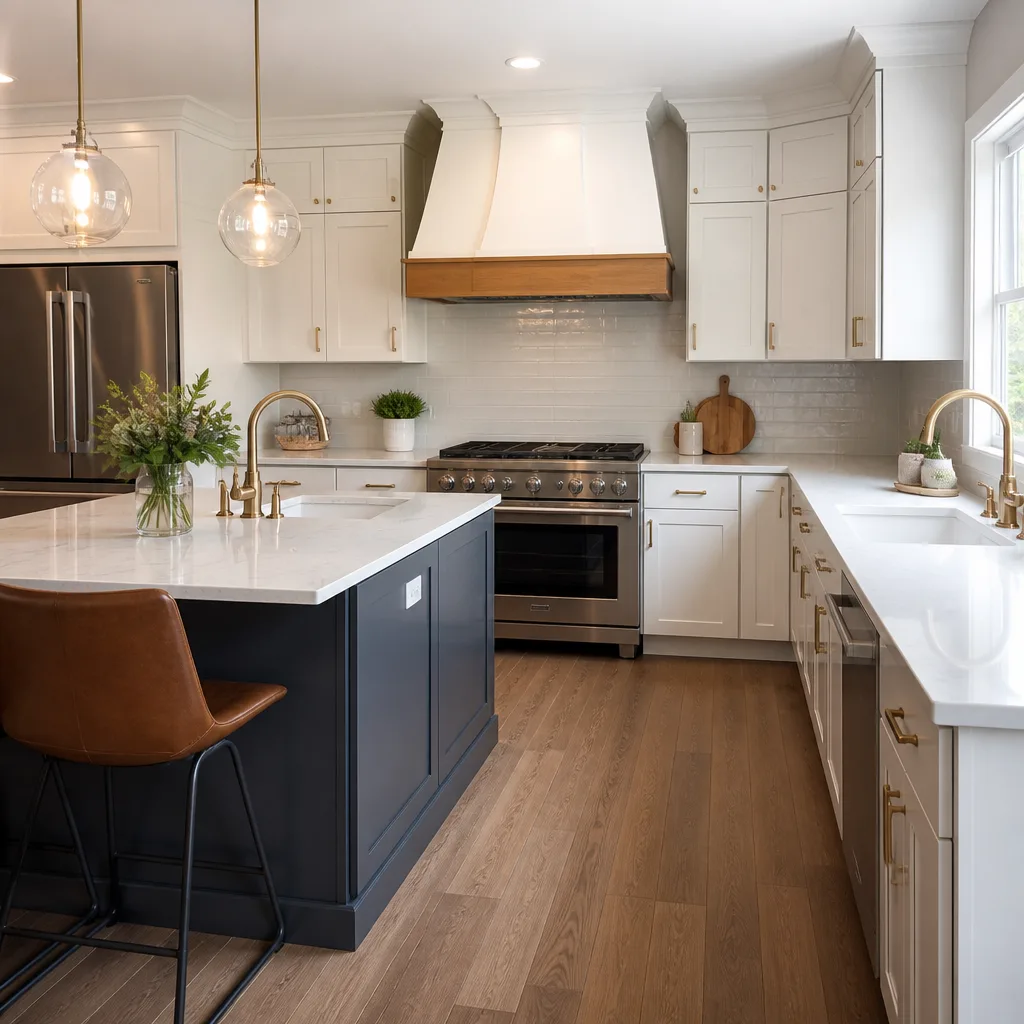
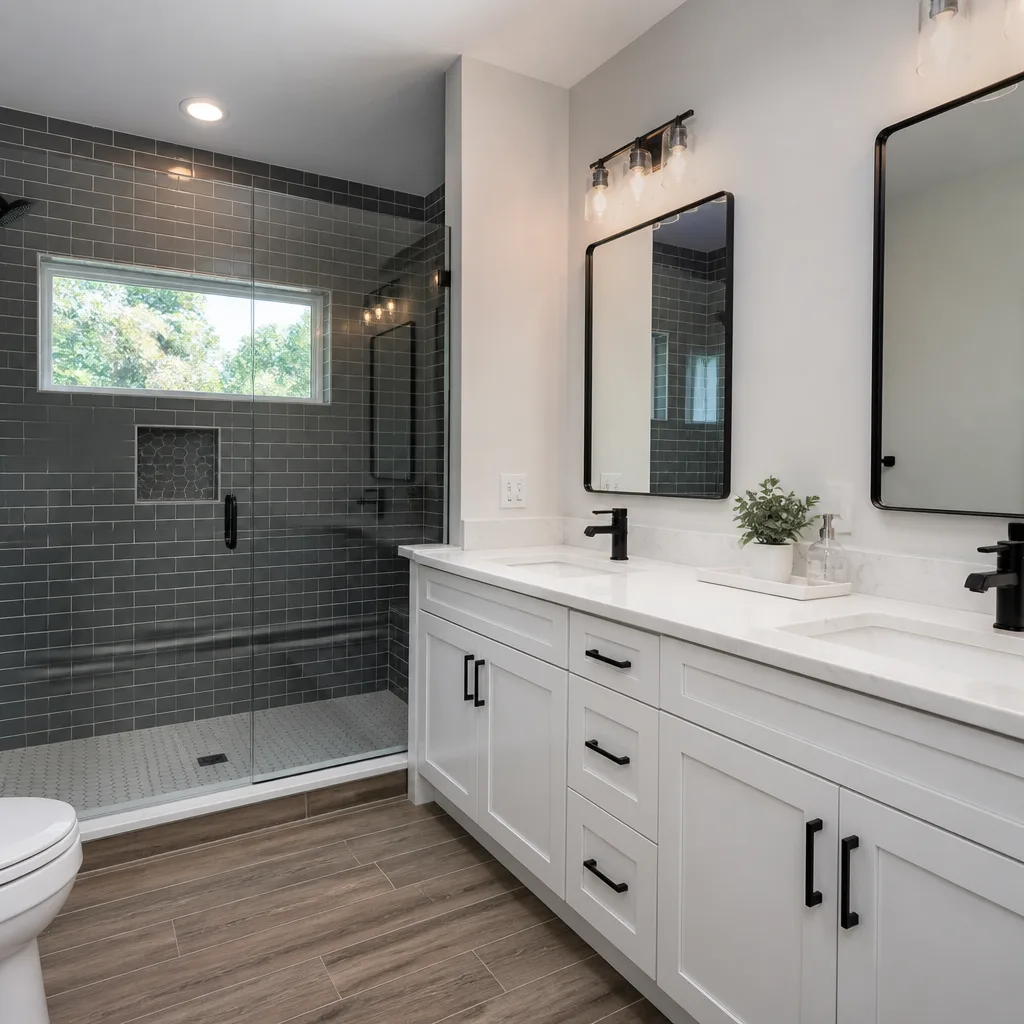
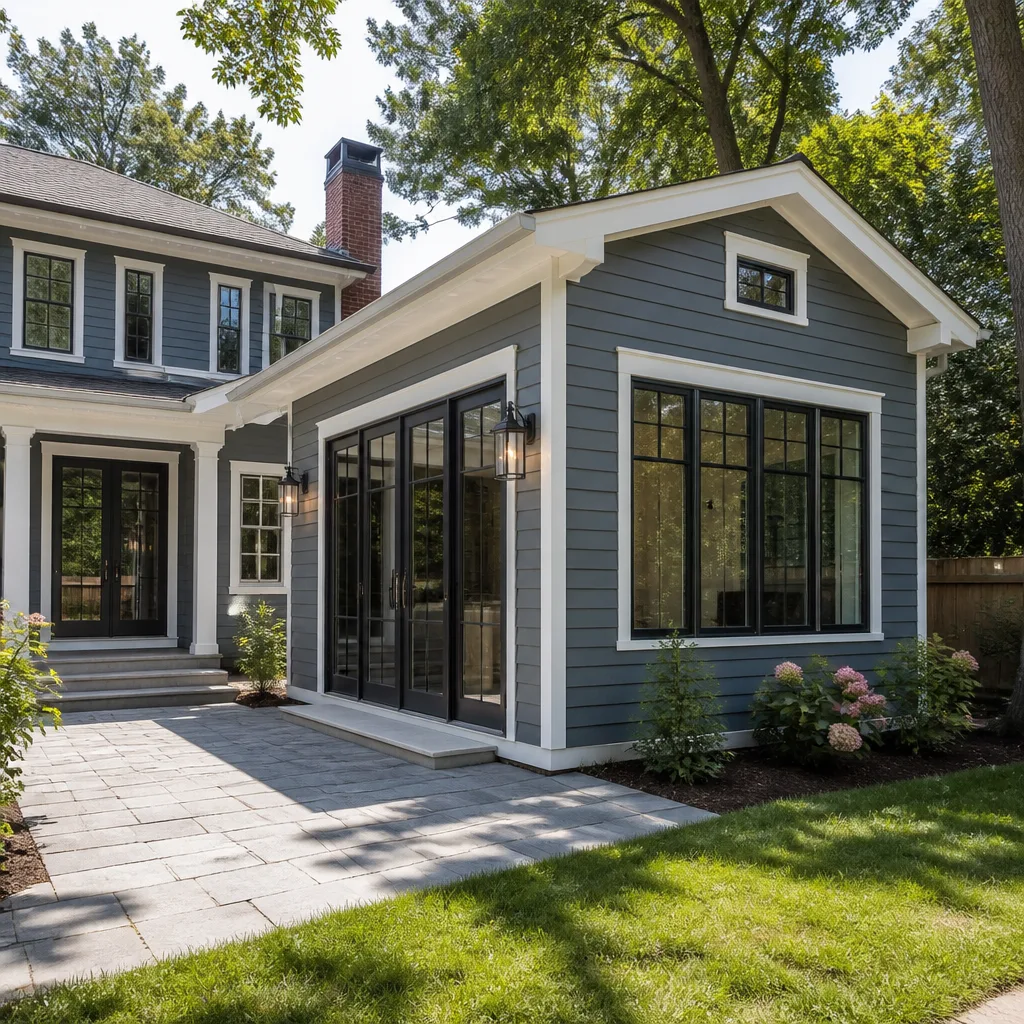

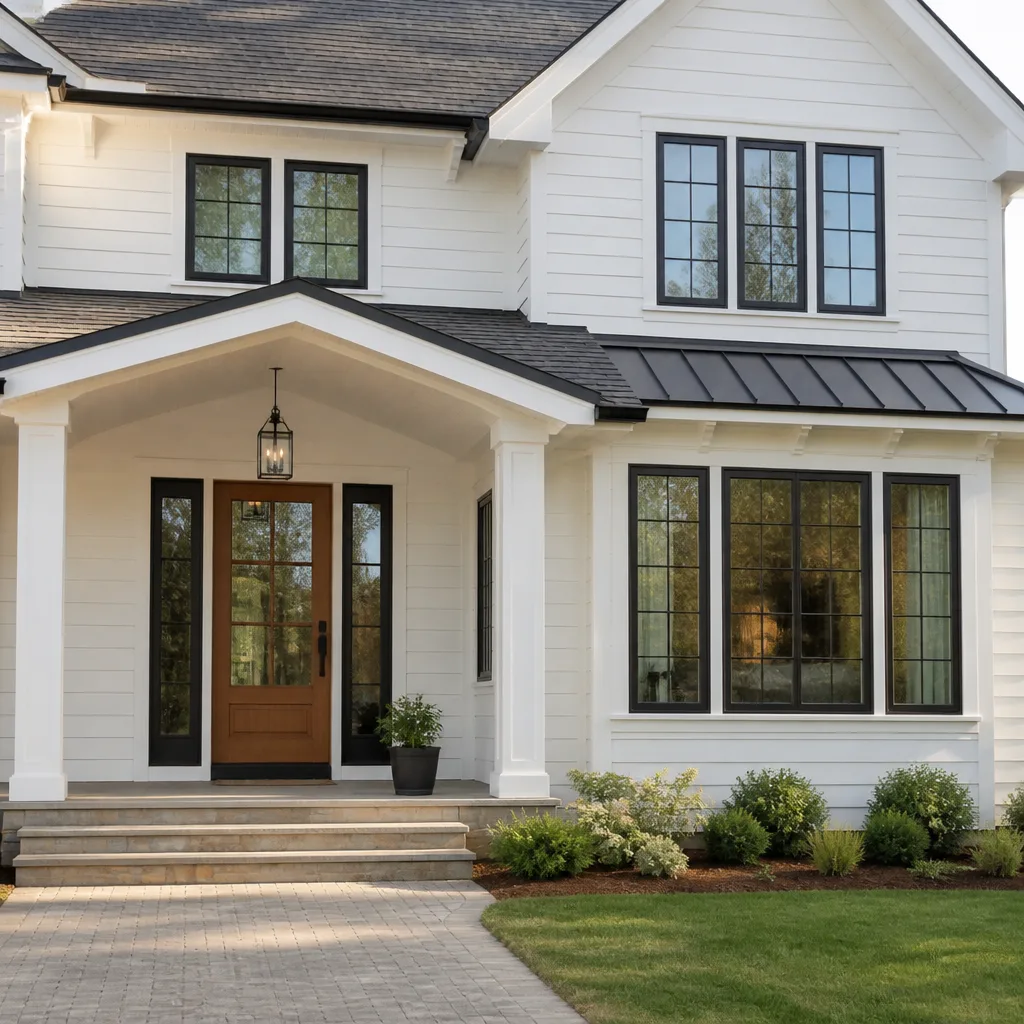
 Before
 After
After Before
 After
After Before
 After
AfterConstruction Cost Breakdown: The Mission Viejo Homeowner’s Reference for 2026
Two contractors quote the same Mission Viejo kitchen at $52,000 and $79,000. The gap is not necessarily dishonesty. One priced a $28-per-square-foot porcelain tile, the other priced a $9-per-square-foot ceramic. Neither bid made the material tier explicit, so the homeowner cannot compare apples to apples. This happens because most cost guides publish ranges so wide - $150 to $400 per square foot - they are operationally useless for planning. In this guide, we break construction costs into their actual components: labor, materials, permit, overhead, and margin. You will learn how to read a contractor’s markup model, how material tiers from Masco to Sub-Zero move the number, and how to use a signed allowance schedule to control cost exposure before anyone picks up a tool.
Quick Answer
A typical Mission Viejo construction project in 2026 breaks down to 35-45% labor, 30-40% materials, 8-15% permits and fees, and 15-25% contractor overhead and margin. For a $75,000 kitchen remodel, that means roughly $30,000 in labor, $26,000 in materials, $7,500 in permits and fees, and $11,500 in overhead and profit. The exact split depends on whether your contractor marks up subcontractor labor or charges a flat management fee, which changes your effective cost per trade by 10-20%.
Table of Contents
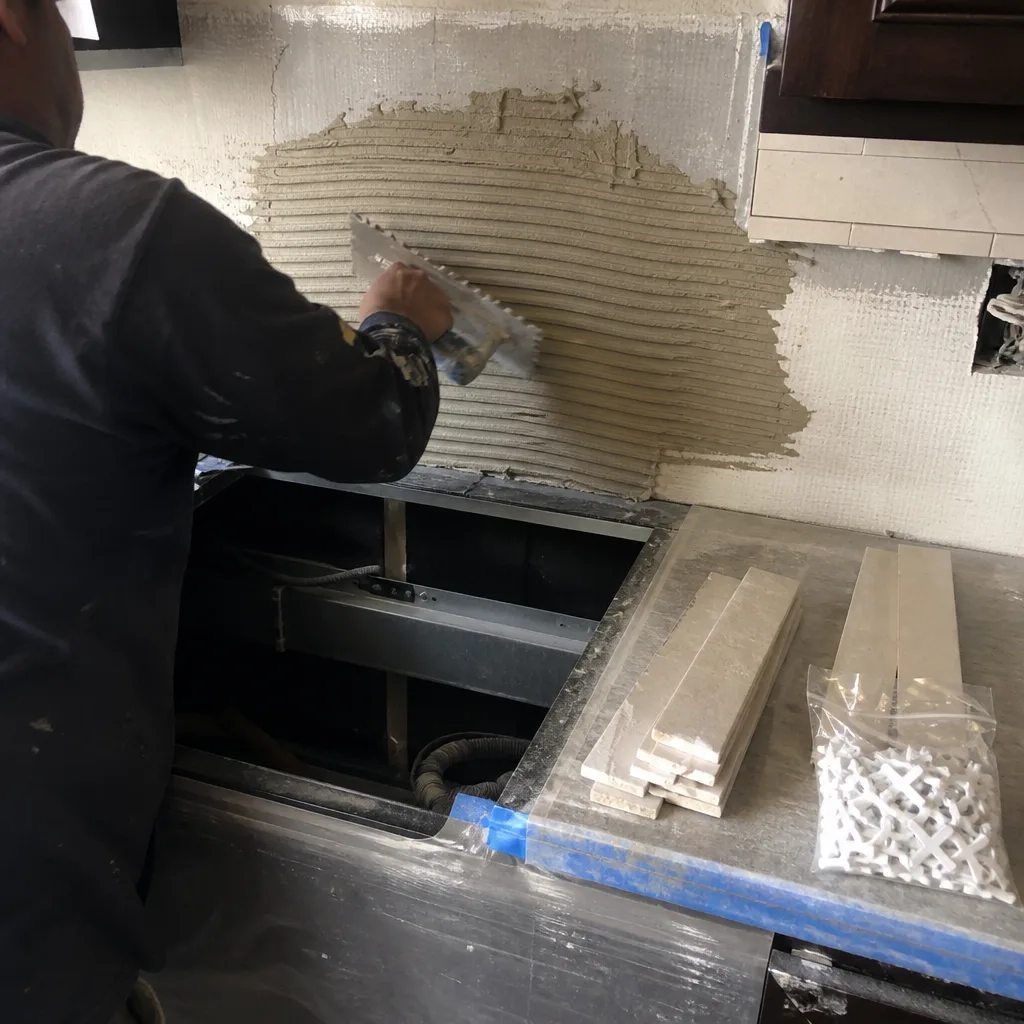
- Why Contractor Bids for the Same Mission Viejo Project Vary by 40%
- Component-Level Cost Breakdown: Four Common Mission Viejo Projects
- How to Read a Contractor’s Markup Model
- Material Tier Definitions with Named Brand Examples
- Mission Viejo-Specific Cost Components Other Cities Don’t Have
- Using a Signed Allowance Schedule to Control Cost Exposure
- Common Mistakes to Avoid
- When to Call a Professional
- Frequently Asked Questions
 Before
 After
AfterWhy Contractor Bids for the Same Mission Viejo Project Vary by 40%
The variation starts with assumptions that never appear on the bid page. One contractor assumes standard 3/4-inch plywood subfloor; another walks the site, finds the original 1970s particleboard in a Casta del Sol ranch, and prices replacement. One includes three coats of primer on new drywall; another budgets one. These are not line items you will see labeled “assumption.” They are buried in lump-sum numbers.
Material tier is the biggest hidden variable. A kitchen remodel in Mission Viejo might specify “install backsplash tile” with no grade attached. That line could mean $2.50-per-square-foot subway ceramic or $34-per-square-foot zellige from Morocco. Both are valid tiles. Neither contractor is wrong. But the homeowner who does not ask receives a surprise at selection time, or a change order.
Labor assumptions differ too. One contractor uses employees with workers’ compensation and payroll taxes; another uses 1099 subcontractors with lower hourly rates but no supervision guarantee. The employee model costs more upfront but includes quality control and liability coverage. The 1099 model saves money until a callback requires a return trip that the original installer refuses.
Finally, overhead recovery varies. A contractor with a showroom on Marguerite Parkway, three project managers, and a full-time estimator builds $18,000 of annual overhead into every job. A one-truck operator working from a home office recovers almost nothing. The first bid looks inflated. The second looks cheap. The difference is not the work. It is the business model.
Our approach at Rowan Construction Group Mission Viejo is to itemize the material tier, name the brand or equivalent, and write the price before any work starts. Under Clause 1 of the Haven Standard, the quote is a flat price with a written scope and a written warranty. No surprises.
Component-Level Cost Breakdown: Four Common Mission Viejo Projects
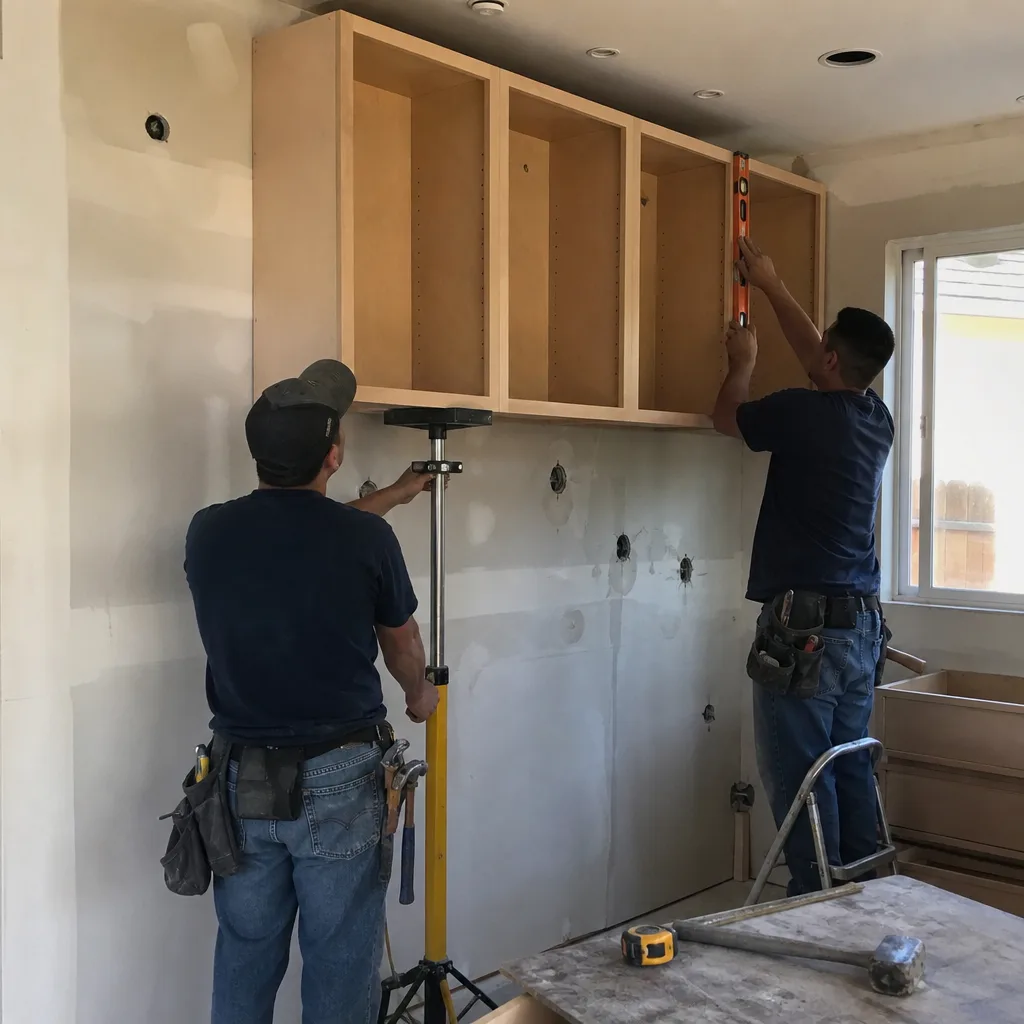
These figures reflect 2026 Orange County labor rates, material costs from our vetted supplier network, and permit fees as published by the City of Mission Viejo and Orange County. They are ranges, not quotes. Your project will vary with site conditions, access, and finish selections.
Kitchen Remodel: 200 Square Feet, Mid-Grade Finish
| Labor (demolition, rough carpentry, electrical, plumbing, tile, paint, finish) | $28,000 - $36,000 |
| Materials (cabinets, countertops, tile, fixtures, appliances, flooring) | $22,000 - $32,000 |
| Permits & fees (City of Mission Viejo building permit, electrical, plumbing, plan check) | $2,800 - $4,200 |
| Contractor overhead & margin | $12,000 - $18,000 |
| Total project range | $64,800 - $90,200 |
Labor dominates kitchen work because multiple trades sequence through the same space. Demolition takes two days. Rough electrical and plumbing take three. Cabinet installation, a skilled carpentry task, takes two to three days for a 20-linear-foot run. Countertop templating and fabrication add a week of calendar time even if installation is only a day. Tile backsplash and final paint complete the sequence. In Mission Viejo’s 1970s and 1980s housing stock, we regularly find galvanized plumbing and aluminum wiring that trigger code-required upgrades, adding $3,000-$6,000 to labor and materials that a visual bid cannot predict.
Bathroom Remodel: 80 Square Feet, Full Gut
| Labor (demolition, waterproofing, tile, plumbing, electrical, ventilation, paint) | $14,000 - $19,000 |
| Materials (vanity, toilet, tub or shower system, tile, fixtures, exhaust fan, lighting) | $8,000 - $15,000 |
| Permits & fees | $1,500 - $2,500 |
| Contractor overhead & margin | $5,500 - $9,000 |
| Total project range | $29,000 - $45,500 |
The bathroom remodel in Mission Viejo carries a labor premium because waterproofing is non-negotiable and unforgiving. A shower pan with proper preslope, membrane, and flood testing adds a full day of labor that cheaper bids sometimes skip. We document the flood test with photos, included as standard in our visit record. Tile layout matters in small spaces; diagonal patterns or mosaic insets burn extra labor hours that square-foot pricing obscures.
Room Addition: 400 Square Feet, Slab Foundation, Gable Roof
| Labor (foundation, framing, roofing, electrical, plumbing, HVAC, insulation, drywall, paint, flooring) | $52,000 - $68,000 |
| Materials (concrete, lumber, roofing, windows, insulation, drywall, flooring, fixtures) | $38,000 - $52,000 |
| Permits & fees (building, electrical, plumbing, mechanical, plan check, school fees, park fees) | $6,000 - $10,000 |
| Contractor overhead & margin | $24,000 - $36,000 |
| Total project range | $120,000 - $166,000 |
Room additions in Mission Viejo trigger the full suite of Orange County fees. School facility fees run $3.28 per square foot as of 2026. Park and recreation fees add another $1,000-$2,000 depending on project type. The City of Mission Viejo requires two plan check cycles minimum for additions over 200 square feet; each cycle is $800-$1,200. If corrections are required, re-inspection fees apply at $180 per visit. These are not optional costs and they are not negotiable. A bid that omits them is either uninformed or planning to surprise you later.
ADU (Accessory Dwelling Unit): 500 Square Feet, Detached, One Bedroom
| Labor | $72,000 - $95,000 |
| Materials | $58,000 - $78,000 |
| Permits & fees (including fire sprinkler, utility connection, school, park, plan check) | $12,000 - $18,000 |
| Contractor overhead & margin | $35,000 - $50,000 |
| Total project range | $177,000 - $241,000 |
ADUs carry the highest permit burden of any residential project type in California. Senate Bills 9 and 10 streamlined zoning but not fees. Fire sprinkler requirements, triggered at 500 square feet in most Mission Viejo configurations, add $8,000-$12,000 in materials and labor. Utility connections to sewer and water, often requiring trenching through established landscaping in Painted Trails or Canyon Crest neighborhoods, run $4,000-$8,000 depending on distance to the main. Solar readiness, required under 2020 Title 24 standards, adds panel capacity and inverter cost even if the homeowner does not install panels immediately.
How to Read a Contractor’s Markup Model
Contractors recover profit and overhead through two primary models. The model affects your effective cost per trade, your transparency, and your exposure to change-order inflation.
Model 1: Percentage Markup on Subcontractor Labor and Materials
The contractor bids each trade at cost, then adds 15-25% markup. A plumber who charges $4,500 becomes $5,400 at 20% markup. An electrician at $3,200 becomes $3,840. The homeowner sees line items but cannot verify the underlying cost. The contractor has incentive to use higher-cost subcontractors because the percentage yields more absolute dollars. We have reviewed competitor bids where the markup alone exceeded our entire management fee for the same scope.
Model 2: Flat Management Fee or Fixed Contract Price
The contractor quotes a single number for the project, built from internal estimates. The markup is not disclosed as a percentage. The homeowner compares total prices. The contractor absorbs risk if subcontractors overrun but may cut scope or quality to protect margin. This model rewards efficiency but hides the component math.
Model 3: Cost-Plus with Guaranteed Maximum Price
The contractor bills actual costs plus an agreed fee, capped at a maximum. The homeowner sees receipts. The contractor shares savings below the cap but recovers no overruns above it. This is the most transparent model and the most administratively complex. It requires trust, documentation, and a contractor willing to open books.
At Rowan Construction Group Mission Viejo, we use a fixed contract price built from itemized estimates. The customer receives the underlying estimate for reference, but the contract price is the binding number. Under the Haven Standard, no work proceeds on a change until the change order is signed. This discipline, which Haven acquired Rowan for in 2022, is why our projects finish within a few percent of the agreed cost across 4,000-plus jobs since 2007.
To compare bids fairly:
- Request the subcontractor list and verify each is licensed and insured in California.
- Ask whether markup is calculated on labor only, or labor plus materials, or total project cost.
- Calculate the effective hourly rate: divide the trade line item by the estimated hours the contractor provides.
- Compare effective rates across bids, not just bottom lines.
Material Tier Definitions with Named Brand Examples
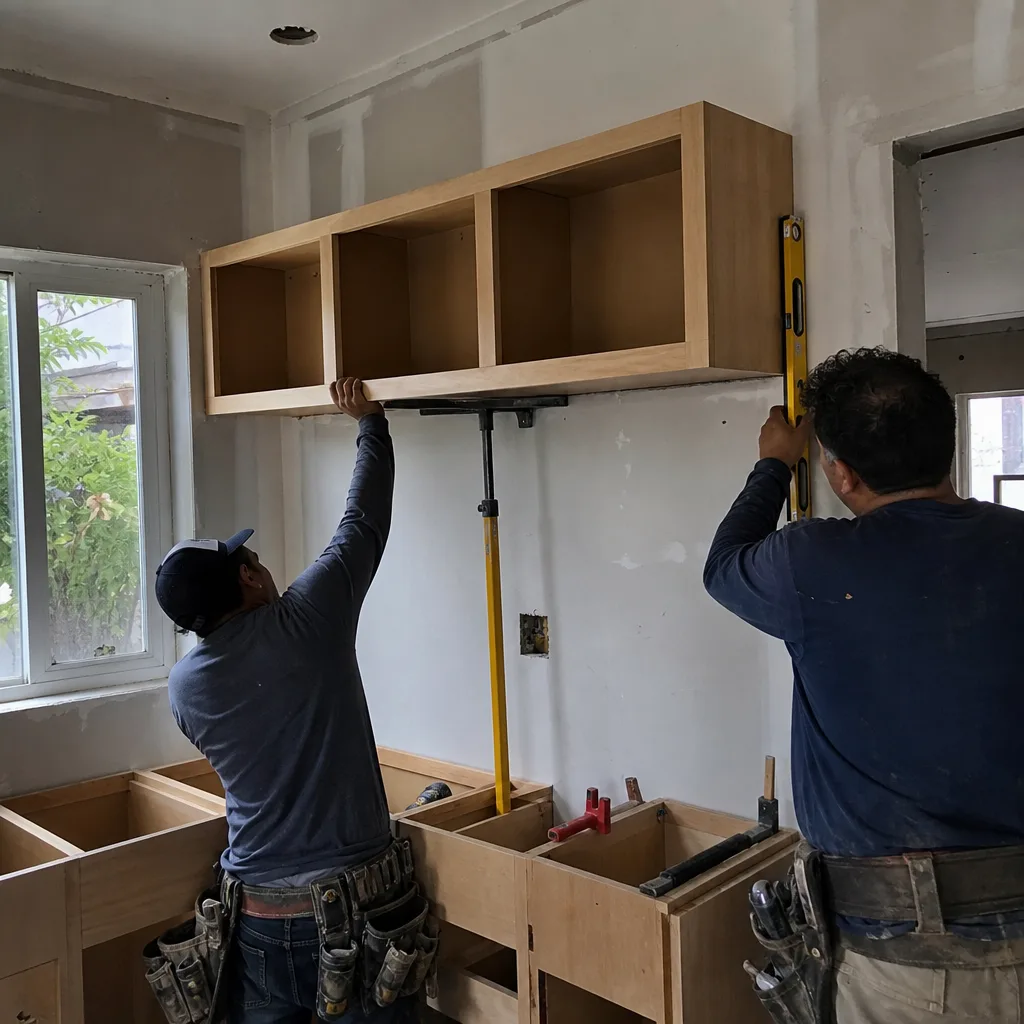
Material selection drives 30-40% of project cost variation. Contractors who do not specify tier invite mismatch between expectation and delivery. We define three tiers with examples from our vetted supplier network.
Entry Tier: Functional, Code-Compliant, Limited Selection
Cabinets: Masco stock units, particleboard boxes, thermofoil or laminate faces. Countertops: laminate or basic quartz composite. Fixtures: American Standard builder-grade, Delta Monitor series. Tile: ceramic, $3-$6 per square foot. Appliances: Whirlpool or Frigidaire standard configurations.
Cost impact: A full kitchen at entry tier runs $18,000-$26,000 in materials alone. Suitable for rental properties, quick resale, or homeowners who prioritize function over longevity.
Mid Tier: Durable, Styled, Broad Selection
Cabinets: Merillat or KraftMaid semi-custom, plywood boxes, hardwood or painted MDF faces. Countertops: Cambria or Caesarstone quartz, 2cm or 3cm. Fixtures: Kohler Purist or Toto Drake, Moen Align. Tile: porcelain or natural stone, $8-$18 per square foot. Appliances: KitchenAid, Bosch, or GE Profile.
Cost impact: Same kitchen at mid tier runs $28,000-$42,000 in materials. This is the most common selection for Mission Viejo homeowners aged 35-50 who plan to stay 7-15 years. The kitchen remodeling projects we deliver in Mission Viejo’s Canyon Crest and Madrid communities fall predominantly in this tier.
Premium Tier: Custom, Imported, Performance-Driven
Cabinets: Custom millwork, hardwood dovetail construction, integrated lighting. Countertops: slab marble, quartzite, or Dekton. Fixtures: Waterworks, Lefroy Brooks, or Dornbracht. Tile: zellige, handmade ceramic, or large-format porcelain, $25-$65 per square foot. Appliances: Sub-Zero, Wolf, Miele, or Gaggenau.
Cost impact: Same kitchen at premium tier runs $55,000-$95,000 in materials. Lead times extend to 12-16 weeks for European fixtures. The investment suits long-term ownership and specific performance requirements, such as a home baker who needs a Wolf dual-fuel range with precise temperature control.
The critical step: require your contractor to name the tier in the written quote. “Tile backsplash, 35 square feet, mid-tier porcelain, $12-$16 per square foot equivalent” is a line item you can verify. “Tile backsplash” is not.
Mission Viejo-Specific Cost Components Other Cities Don’t Have
Mission Viejo’s planned-community structure, hillside geography, and coastal-adjacent climate create cost factors that generic Orange County guides miss.
HOA Architectural Review Fees
Most Mission Viejo neighborhoods operate under homeowners associations with architectural review committees. The Casta del Sol HOA charges $350 for a major exterior alteration application. The Painted Trails community charges $200 for review plus $150 for inspection after completion. Canyon Crest charges $250. These fees are in addition to city permits and are not optional. A contractor who builds in Mission Viejo regularly knows this; a contractor from outside the city may omit it and present a surprise invoice.
Re-Inspection Fees
The City of Mission Viejo Building Division charges $180 per re-inspection when corrections are required. In our experience, re-inspections cluster in three areas: electrical panel grounding in pre-1980s homes, fire-rated drywall at garage ceilings in additions, and egress window sizing in basement conversions. A contractor who pre-emptively addresses these items avoids the fee. One who does not builds $360-$540 of re-inspection risk into the project.
Access-Restricted Street Surcharges
Certain Mission Viejo communities, including portions of Casta del Sol and the hillside streets above Oso Parkway, restrict truck access by weight or hours. Concrete pump trucks, roofing material deliveries, and dumpster placement require coordination. Some trades add $200-$400 per day for restricted-access logistics. This is legitimate cost recovery, not padding, but it should appear in the bid.
Climate-Driven Material Specifications
Mission Viejo’s combination of marine-layer moisture and summer heat above 90 degrees affects material selection. Exterior paint requires 100% acrylic latex with mildewcide, not standard vinyl acrylic. Roofing in Mission Viejo benefits from cool-roof shingles with solar reflectance index above 29, which GAF Timberline HDZ and Owens Corning Duration both meet. Pavers and hardscape require joint sand with polymer stabilizer to resist washout during winter storms. These are not upgrades. They are correct specifications for the location, and they cost more than generic-grade alternatives.
Using a Signed Allowance Schedule to Control Cost Exposure
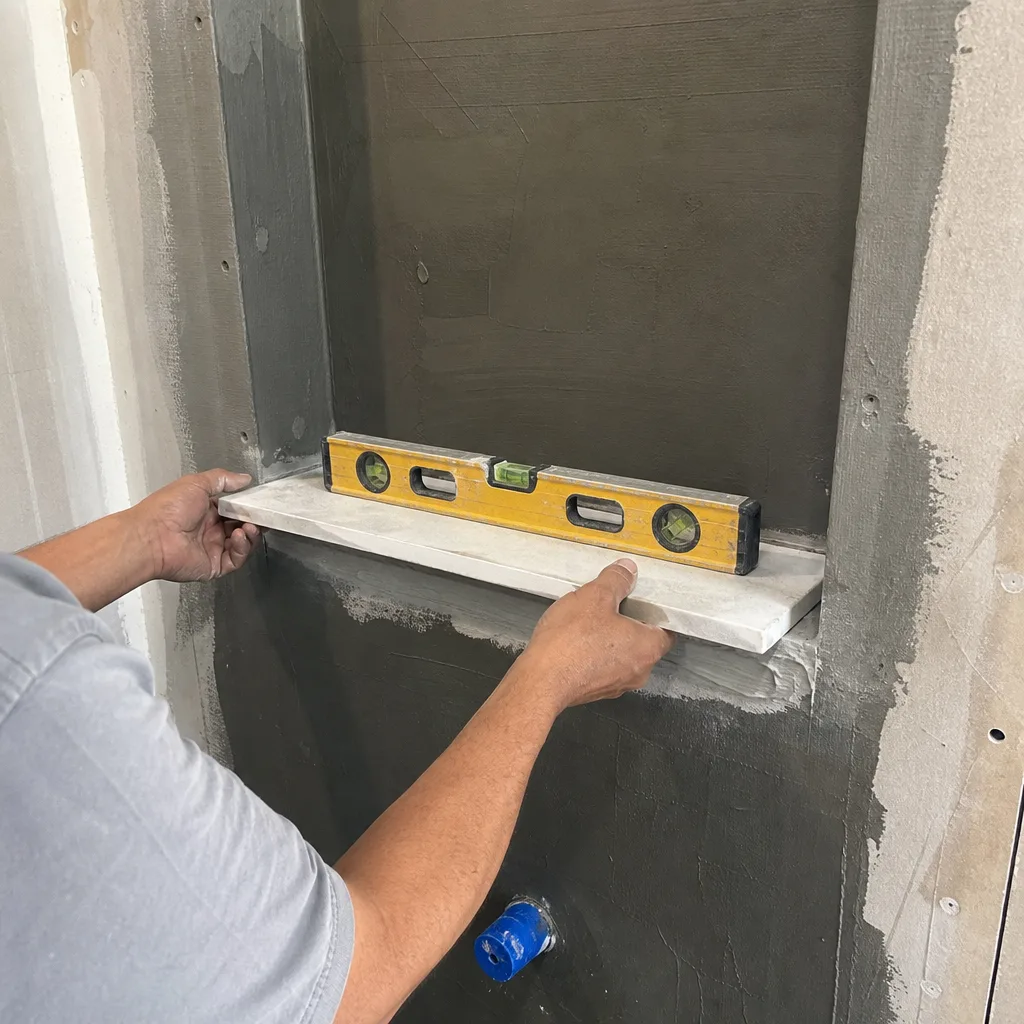
An allowance is a dollar figure in your contract for selections not yet made: tile, fixtures, lighting, hardware. It is a placeholder with a number attached. The danger is that the number may not match reality.
What a Correctly Written Allowance Looks Like
A weak allowance: “Tile allowance: $3,000.” A strong allowance: “Master bathroom floor and shower tile, 85 square feet floor plus 75 square feet walls, mid-tier porcelain or ceramic, $11-$14 per square foot material, $4.50 per square foot installation, total allowance $2,550-$2,975.”
The strong allowance names the location, the quantity, the tier, the unit price, and the installation rate. You can verify it at any tile showroom. The weak allowance is a black box.
How to Verify Market Pricing
- Visit two showrooms with the allowance specification. Ask for three options at the stated tier.
- Note the installed price, not just material. Some showrooms quote material only; your contractor’s allowance includes installation.
- If your selection exceeds the allowance, the difference is a change order. Under the Haven Standard, no change proceeds without a signed change order. You know the exact delta before work starts.
- If your selection is below the allowance, the credit should apply to your final invoice. Confirm this in writing before contract signing.
We have seen competitors set allowances 20-30% below market to make the initial bid attractive. The homeowner selects tile at $14 per square foot and receives a $1,800 change order for an “upgrade.” The tile was never an upgrade. The allowance was a fiction. Our practice is to set allowances at the 75th percentile of market pricing for the stated tier, so most selections fall within or below the number.
Common Mistakes to Avoid
- Comparing bottom-line bids without reading scope. A $68,000 kitchen bid that excludes permit fees, appliance delivery, and final electrical inspection is not cheaper than a $75,000 bid that includes them. Itemize before comparing.
- Accepting verbal allowances. An allowance not written with quantity, tier, and unit price is not an allowance. It is a future argument.
- Ignoring the permit fee line. In Mission Viejo, permits and fees run 8-15% of project cost. A bid with no permit line is either incomplete or planning to work without permits, which voids insurance and creates resale liability.
- Choosing the lowest subcontractor effective rate without verifying license status. Check the California State License Board for active status, bond, and workers’ compensation. An uninsured worker on your property is your financial exposure.
- Assuming mid-tier materials are standard. “Standard” has no definition in construction contracts. Name the brand or the price per unit, or accept that the contractor will choose the cheapest compliant option.
- Skipping the photo documentation requirement. A contractor who cannot show you photos of substrate condition, waterproofing layers, and completed work is a contractor you cannot verify. Our documented photo record on every visit is included as standard, not optional.
- Signing a contract without a written change-order procedure. Every project encounters unknown conditions. The question is whether you have a signed, priced change order before the additional work starts, or a surprise invoice after.
When to Call a Professional
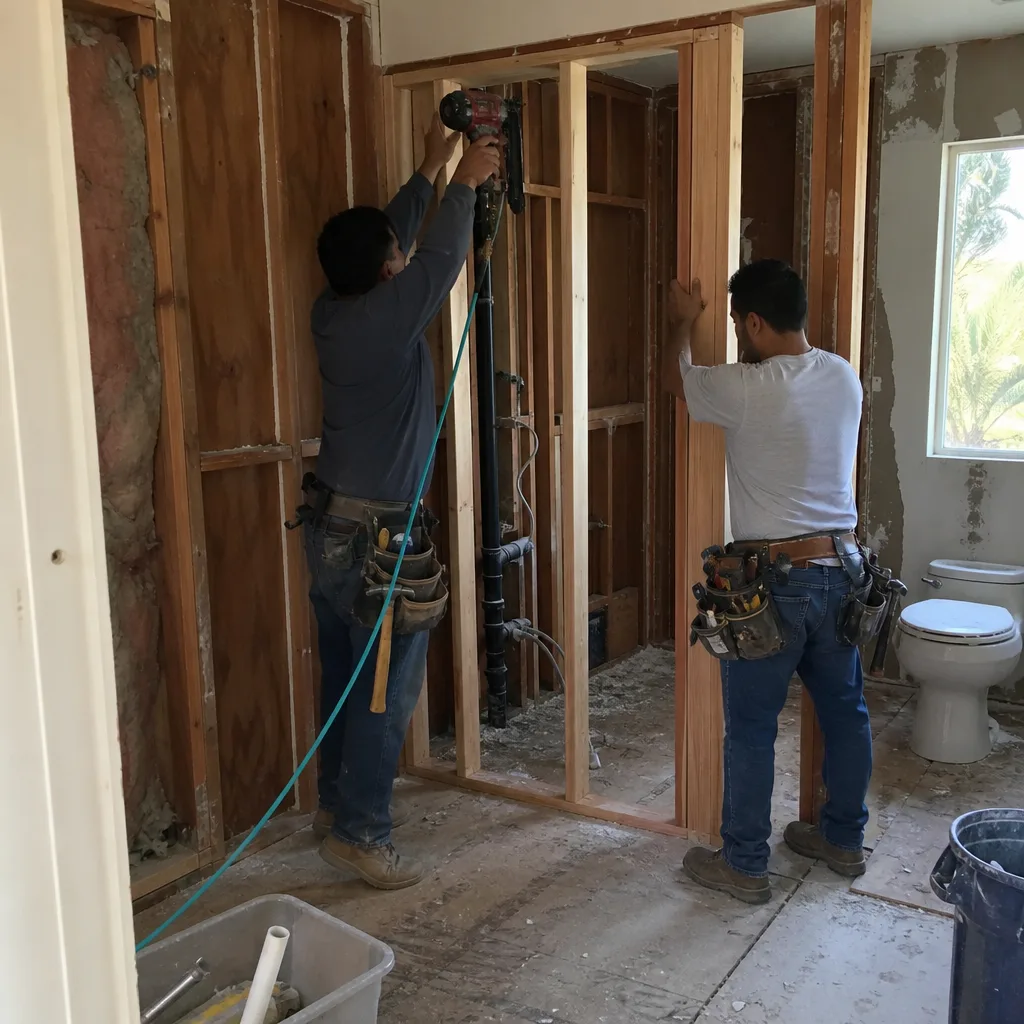
Call a licensed contractor when your project involves structural modification, electrical or plumbing relocation, or work requiring a building permit. In Mission Viejo, this threshold is lower than many homeowners assume: even a bathroom remodel with shower pan replacement requires a plumbing permit and flood-test inspection. A roof replacement over 100 square feet requires a roofing permit. An ADU requires architectural plans, structural calculations, and multiple trade permits.
The cost of professional engagement is not the bid price. It is the cost of errors you do not know to prevent: improper flashing that rots sheathing, unvented exhaust fans that grow mold in attic insulation, undersized footings that crack in seasonal soil movement. Mission Viejo’s hillside soils, particularly in the Canyon Crest and Oso Parkway areas, expand and contract with winter moisture. Foundations and retaining walls designed for flatland conditions fail here.
Rowan Construction Group Mission Viejo offers free estimates in Mission Viejo. We deliver a written price before any work starts, every time, on every trade. Call (657) 297-4635 to schedule your free estimate. We also offer a Free Second Opinion on any written estimate: bring a competitor’s quote and we will review it line by line at no charge.
Frequently Asked Questions
A mid-grade kitchen remodel in Mission Viejo typically costs $65,000 to $90,000 for a 200-square-foot space, with labor at 35-45%, materials at 30-40%, permits and fees at 8-15%, and contractor overhead and margin at 15-25%. Entry-tier projects start near $50,000; premium projects with custom millwork and Sub-Zero appliances exceed $120,000. Call (657) 297-4635 for an exact quote - estimates are free.
The gap usually reflects different material tiers, different labor models (employees versus 1099 subcontractors), different overhead recovery, or different assumptions about hidden conditions. A bid that assumes original 1970s galvanized plumbing will be replaced costs more than one that ignores it. The only way to compare is itemized scope with named materials and verified unit prices.
At Rowan Construction Group Mission Viejo, the contract price is fixed unless you request a change or we encounter a concealed condition that no reasonable inspection could reveal. Even then, under the Haven Standard, no work proceeds on a change until the change order is signed and priced. This discipline has kept our projects within a few percent of the agreed cost since 2007.
Yes. We pull all required permits and schedule all inspections. The permit cost is itemized in your written quote, not hidden. We pass inspections on first attempt in 94% of our Mission Viejo projects because we build to the inspected standard, not to a lower one.
A full kitchen remodel takes 6-10 weeks from demolition to final walkthrough, depending on custom cabinet lead time and countertop fabrication. A bathroom remodel takes 3-5 weeks. Room additions run 4-6 months. ADUs typically take 8-14 months including design, permitting, and construction. These are calendar durations, not active work days.
The Haven Standard is the operating system Rowan Construction Group has followed since 2007, codified into clauses that govern every project. Clause 1 requires a written price before any work starts. The 365-Day Done Right Promise requires us to make right anything that is not done right. Every clause is printed on every page and backed by a terms page, not an asterisk. Haven acquired Rowan in 2022 specifically for this administrative discipline.
The Bottom Line
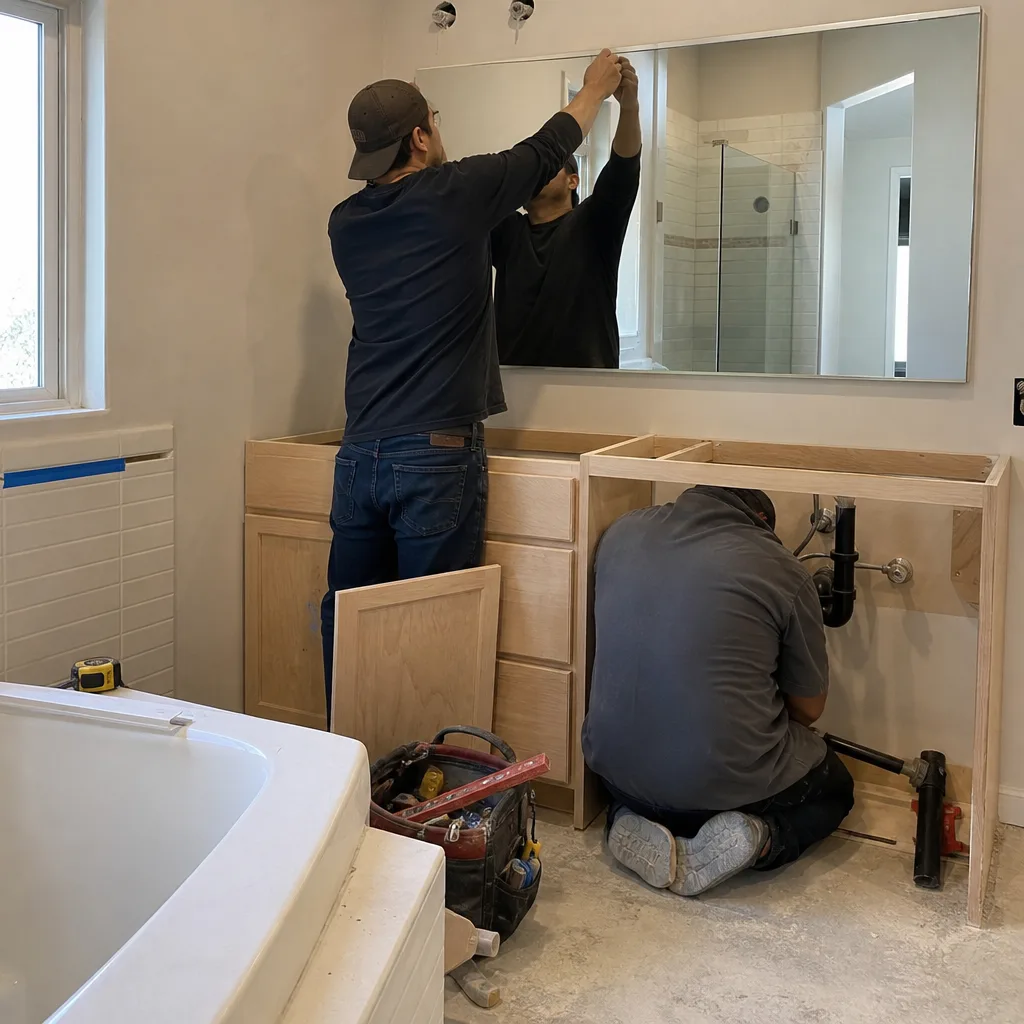
Construction costs are not mysterious. They are the sum of labor, materials, permits, overhead, and margin, each of which can be named, verified, and controlled. The Mission Viejo homeowner who understands component pricing, material tiers, markup models, and allowance schedules enters contractor conversations with power: the power to compare apples to apples, to spot the fiction in a low bid, and to hold every promise to a written standard. The work itself is complex. The math does not have to be.
Written by Grant Rowan, Owner at Rowan Construction Group Mission Viejo, serving Mission Viejo since 2007.