
Last updated September 24, 2026
Free written scope consultation - allowances, timeline, and change-order rules on paper before a single trade is scheduled

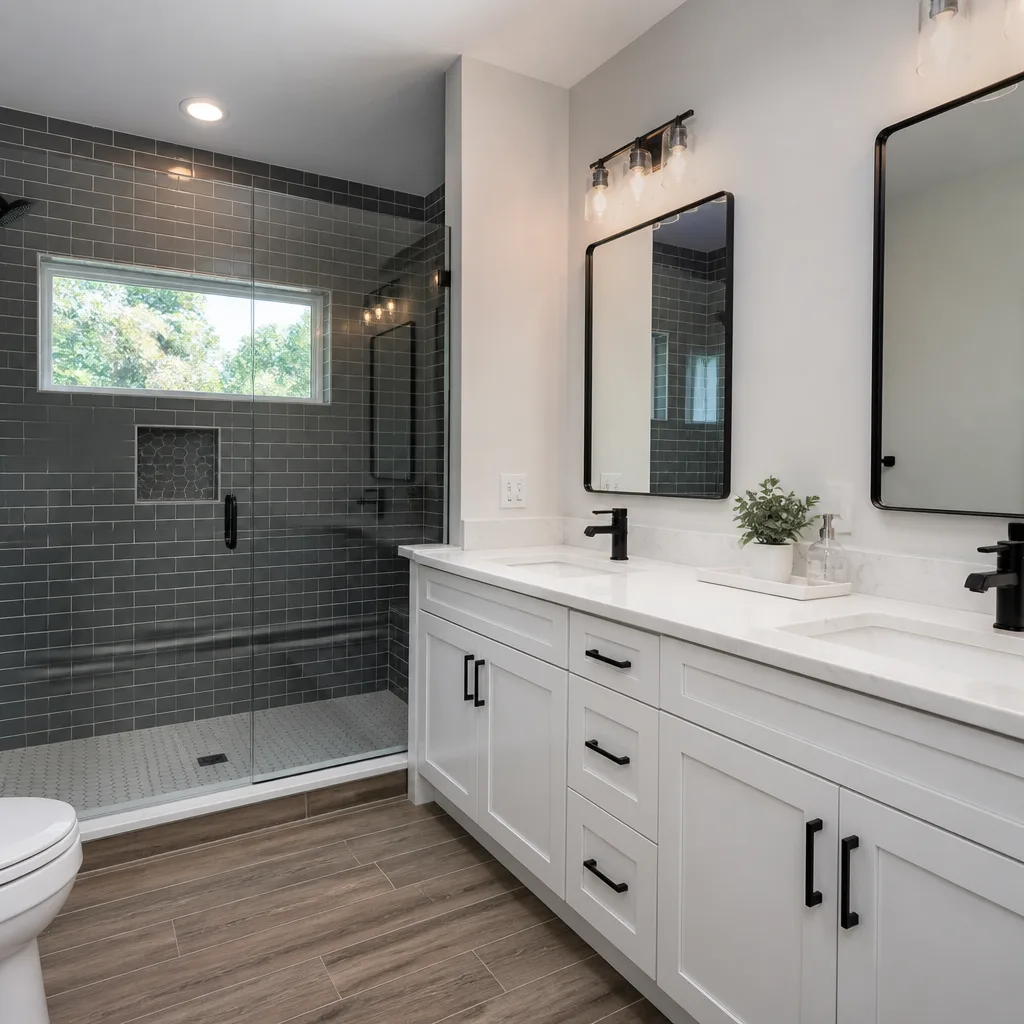





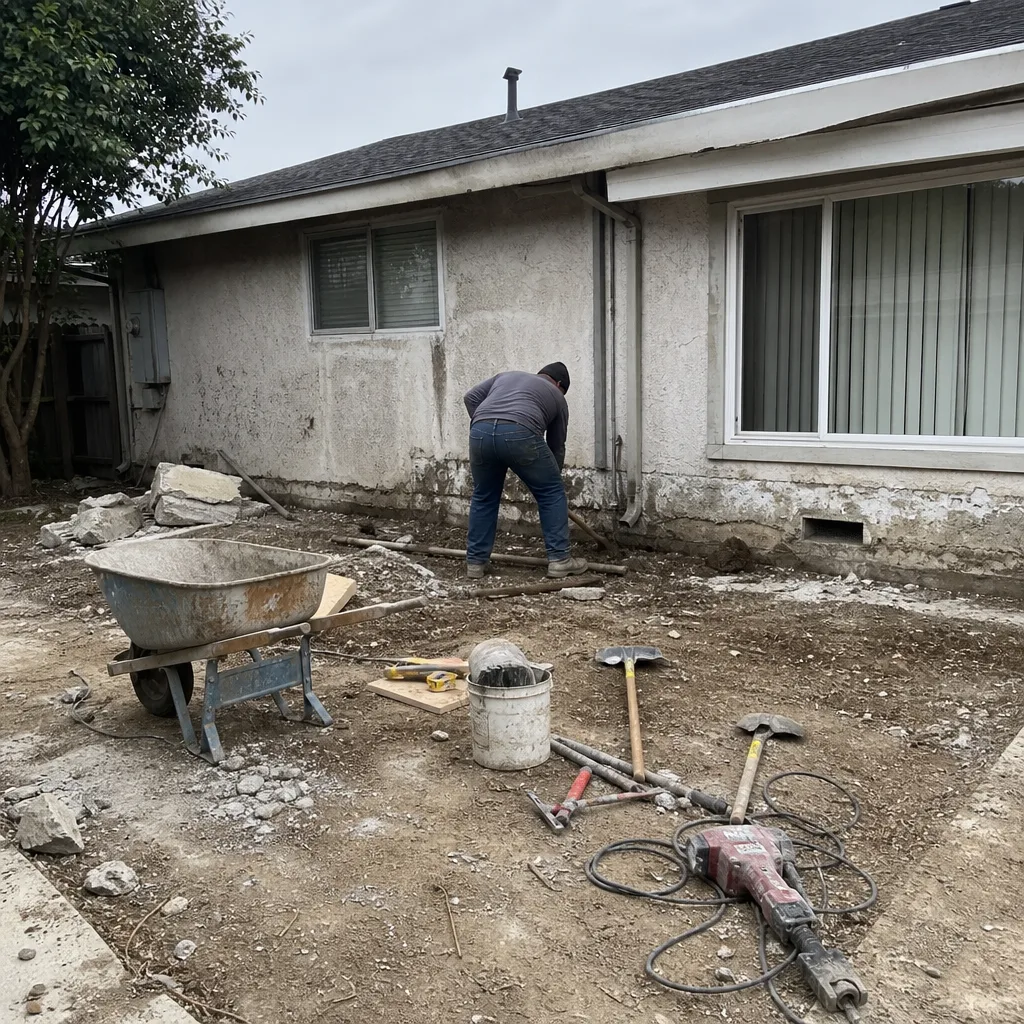 Before
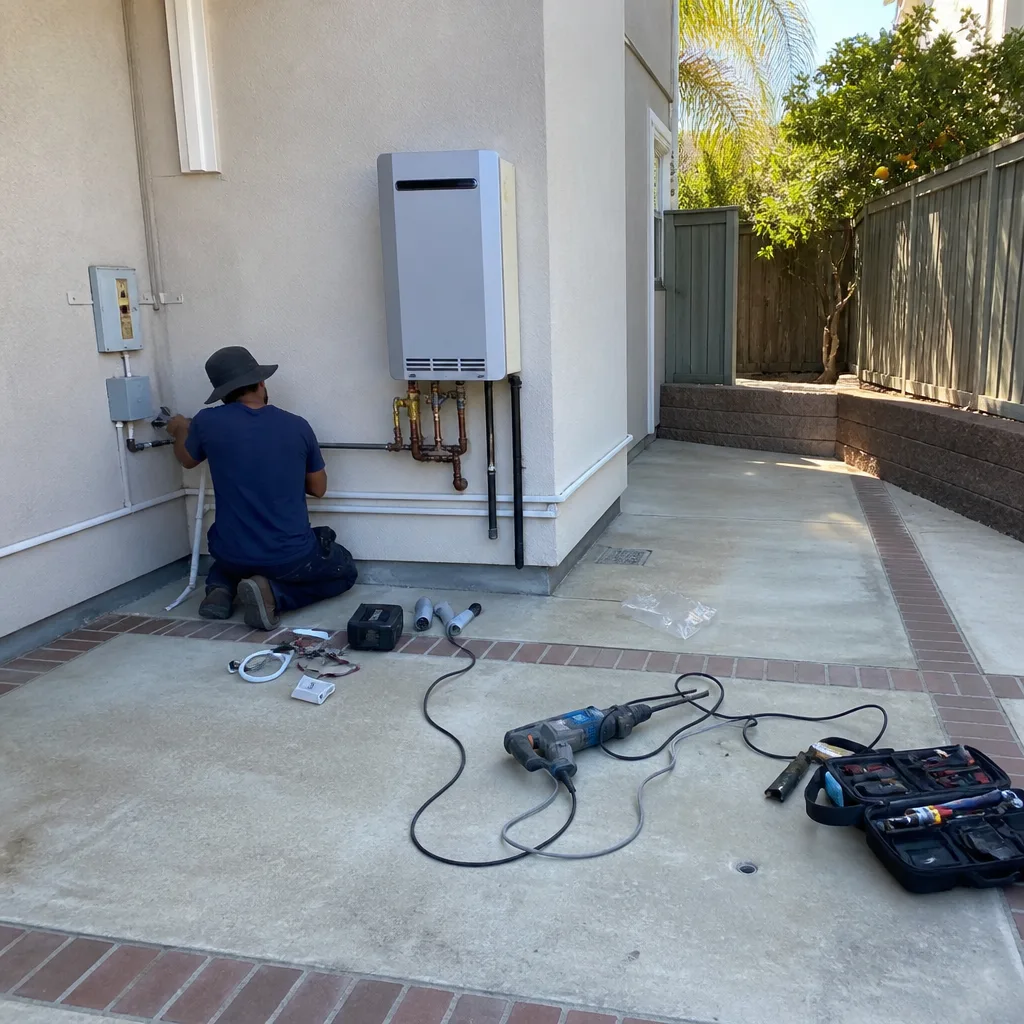 After
After Before
 After
After Before
 After
AfterKitchen Remodeling Maintenance Checklist for Mission Viejo Homeowners
Quartz countertops from brands like Cambria and Caesarstone carry a lifetime warranty - but that warranty is voided by sealers that homeowners apply assuming quartz needs them, because no one told them it doesn’t. In Mission Viejo, where the median kitchen remodel runs $45,000 to $85,000 and resale premiums depend on finish condition, the first 18 months after installation determine whether your investment holds its value or starts showing age prematurely. Most contractors hand over keys with a handshake and a business card. This guide gives you the interval-specific, material-specific checklist we wish every homeowner received: what to check at 30 days, 90 days, 180 days, and one year, tied to the products and climate conditions specific to Orange County kitchens.
Quick Answer
A properly maintained Mission Viejo kitchen requires interval checks at 30, 90, 180, and 365 days post-installation to preserve warranties and catch defects before contractor coverage expires. Key tasks include grout cure verification, cabinet hinge adjustments during the settlement window, caulk joint inspection, and climate-specific monitoring for wood movement during Santa Ana wind season. Document everything with dated photos and written notice to preserve claims under California’s Right to Repair Act.
Table of Contents
- The 30-Day Post-Installation Checklist
- The 90-Day Checklist: Settlement and Adjustment
- The 180-Day Checklist: Midpoint Inspection
- The 365-Day Checklist: Before Warranty Expires
- Material-Specific Care for Common Mission Viejo Finishes
- Mission Viejo Climate Considerations: Santa Ana Winds and Low Humidity
- How to Document Defects to Preserve Warranty Claims
- The HVAC Maintenance Tie-In: Range Hoods and Grease Migration
 Before
 After
AfterThe 30-Day Post-Installation Checklist
Thirty days is the critical window when installation materials finish their initial cure and when defects from rushed work first become visible. In our experience across 4,000-plus projects, more warranty claims originate from items missed in this first month than from any other period.
Grout and Sealant Verification
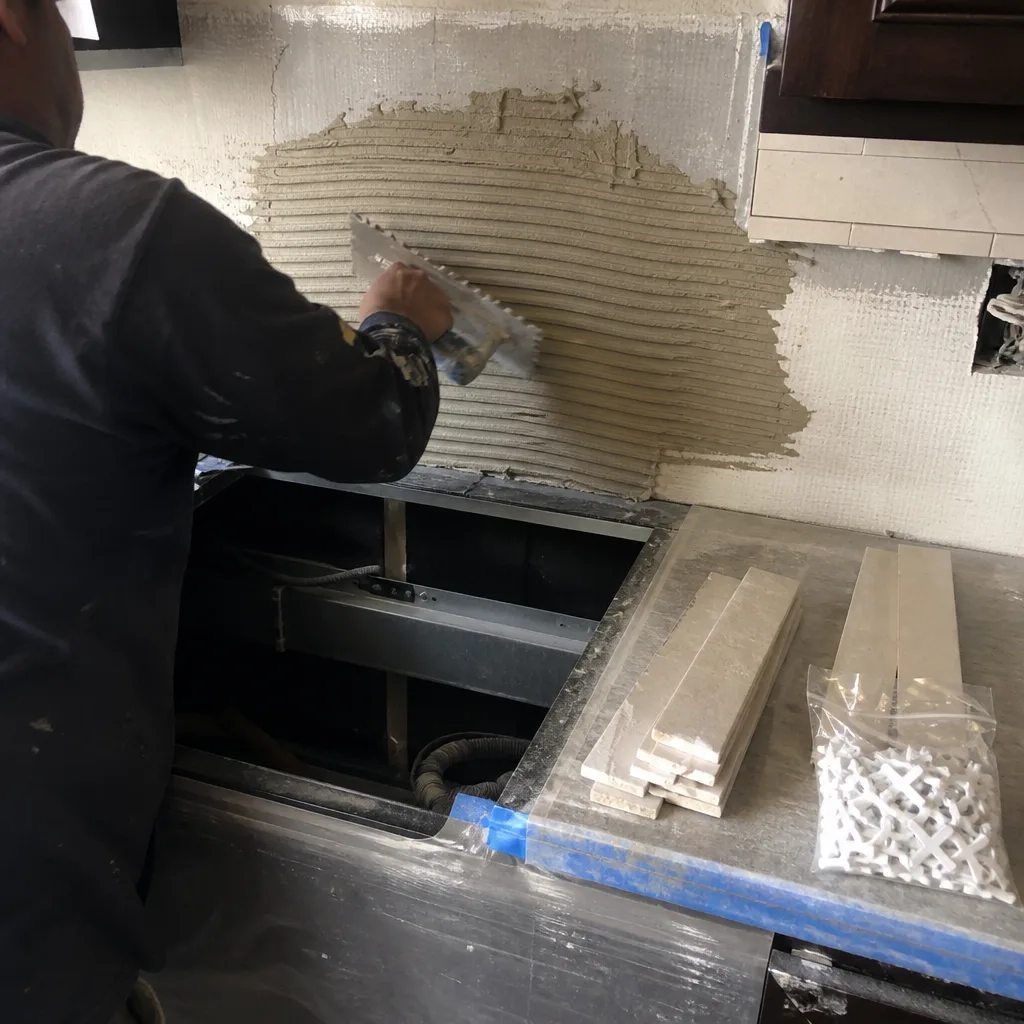
Portland cement grout, still common in Mission Viejo kitchens using ceramic or porcelain tile backsplashes, reaches 80% cure in 7 days but full cure in 28 days. At day 30, inspect:
- Grout color uniformity - patchy discoloration often indicates uneven water exposure during cure or inconsistent mixing ratios
- Surface hardness - scratch lightly with a fingernail; properly cured grout resists marking
- Cracking at inside corners or changes of plane - these are stress fractures from substrate movement, not shrinkage, and they will propagate
Epoxy grout, increasingly specified for its stain resistance, cures harder and faster but requires different inspection. Check for pinholes or voids that trap grease; these are installation defects, not wear.
Silicone Sealant at Countertop-to-Backsplash Joints
The silicone bead between your countertop and backsplash is a flexible joint, not a decorative line. At 30 days, verify it has skinned over completely without bubbles or separation. In Mission Viejo’s dry climate, silicone can skin too fast if the home’s HVAC runs aggressively, trapping solvent underneath and causing later adhesion failure. A proper bead should show consistent tooling marks and full contact with both surfaces.
Plumbing Pressure Test Indicators
Check under-sink cabinet floors for any moisture, staining, or warping. Undermount sinks in particular stress the silicone seal between sink rim and countertop; a slow drip here often evaporates before pooling, leaving only mineral residue as evidence. We document this area in our photo records specifically because homeowners miss it until the cabinet floor delaminates.
Electrical and Appliance Function
Run every appliance through a full cycle. Dishwasher leaks often appear only during the drain pump’s pressure spike. Garbage disposer vibrations can loosen sink flange seals if not seated with fresh plumber’s putty or silicone. Range hood fans should hold a sheet of paper against the filter when running - weak hold indicates duct leakage or improper CFM matching to duct diameter.
What to Document at 30 Days
Photograph every joint, every seal, every cabinet face in consistent lighting. Date the files. If you find anything questionable, send written notice to your contractor with these photos attached. California’s Right to Repair Act (SB 800) gives builders 30 days to respond to written defect claims; starting your documentation early preserves this timeline.
The 90-Day Checklist: Settlement and Adjustment
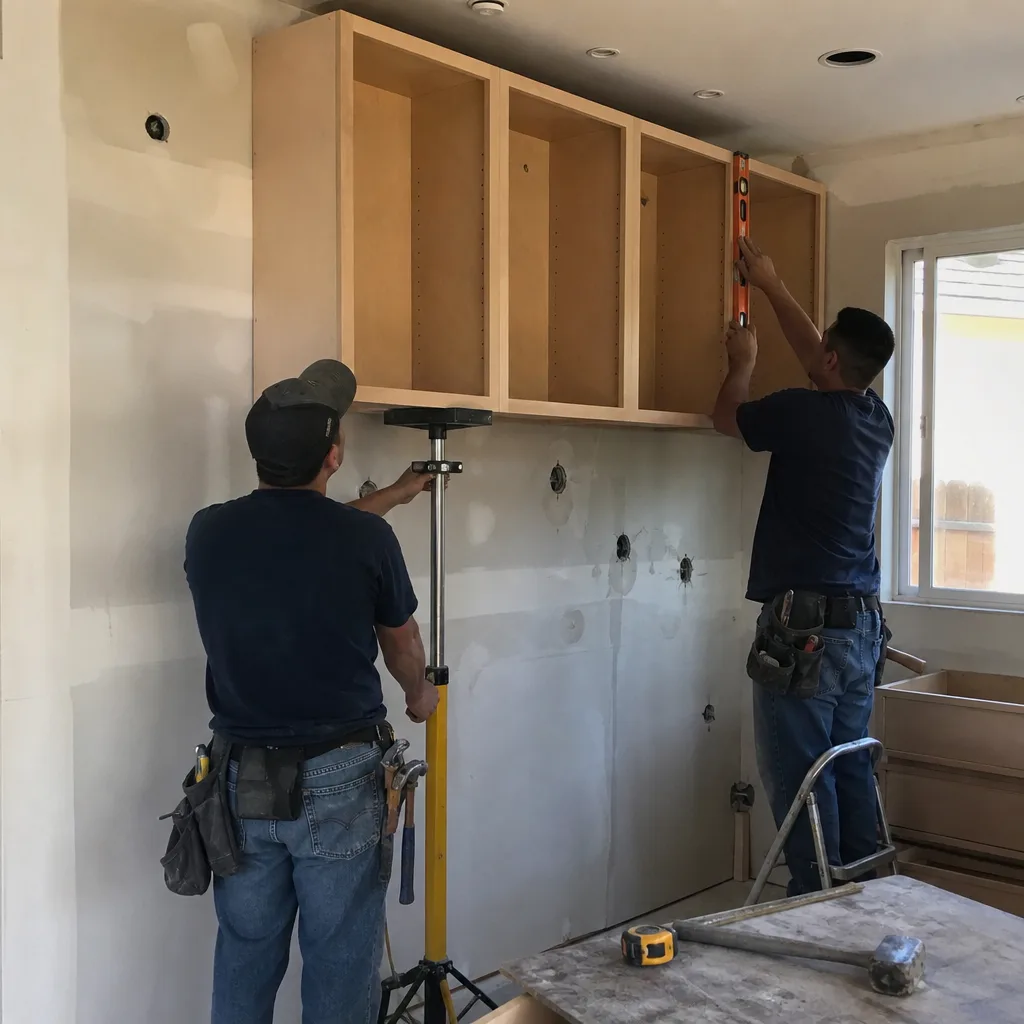
By 90 days, your kitchen has experienced enough thermal cycling and humidity variation to reveal what we call “settlement behavior” - the small movements that happen as materials acclimate to your home’s specific conditions. This is the optimal adjustment window, before materials fully lock into their settled positions.
Cabinet Hinge and Hardware Adjustment
European concealed hinges, standard on KraftMaid, Wellborn, and most semi-custom cabinet lines, have three-axis adjustment screws. At 90 days:
- Check door reveal gaps - the space between door and frame should be consistent top to bottom, typically 1/16 to 1/8 inch
- Test soft-close function; dampers can be dialed tighter or looser with a small screwdriver
- Verify drawer slide full extension without binding; side-mount slides may need front-to-back leveling
- Listen for squeaks or clicks that indicate metal-on-metal contact from misalignment
Painted MDF door and drawer fronts, extremely common in Mission Viejo’s transitional and contemporary kitchens, are particularly sensitive to hinge alignment. A door dragging the frame edge will wear through its paint film in months, exposing the substrate to moisture. The adjustment takes five minutes with a Phillips head; the repair of a worn edge requires refinishing.
Countertop Seam Inspection
Quartz and solid-surface seams should show no change from installation day. A seam that has widened or become palpable to the fingernail indicates substrate movement or inadequate adhesive cure. For quartz specifically, note any discoloration around the seam - some adhesives yellow with UV exposure, and Mission Viejo’s south-facing kitchens get significant direct sun.
Floor Transition and Expansion Gaps
LVP (luxury vinyl plank) installed under cabinetry needs inspection at the visible edges, particularly where flooring meets toe-kicks or appliance garages. The material expands and contracts with temperature; if installed too tight against cabinet bases, it can buckle or telegraph stress through the wear layer. Check for:
- Gapping at plank ends - indicates shrinkage from low humidity or inadequate expansion gap
- Buckling or peaking - indicates expansion without relief
- Squeaks when walked upon - often from subfloor irregularities that settle over time
Backsplash Tile and Accent Elements
Glass tile, metal inserts, and mosaic sheets all move at different rates than their setting materials. At 90 days, check for:
- Grout cracking at material transitions
- Loose tiles - tap lightly; a hollow sound indicates debonding
- Discoloration of natural stone accents - Mission Viejo’s water supply runs moderately hard, and efflorescence can appear as white powder on porous stone
The 180-Day Checklist: Midpoint Inspection
Six months is when deferred maintenance starts compounding. The small grout crack becomes a water path. The loose hinge wears the door edge. The grease film becomes a finish-damaging residue. This inspection catches problems while they’re still quick fixes.
Caulk Joint Comprehensive Review
All flexible joints in a kitchen move continuously: countertop to wall, sink rim to countertop, window stool to backsplash, cabinet panels to walls. At 180 days, every caulk joint needs evaluation for:
- Adhesion failure - pull gently at an edge; proper caulk should tear before releasing
- Compression set - the caulk has been squeezed flat and no longer rebounds
- Mildew staining in wet zones - indicates persistent moisture behind the bead
- Color shift - some silicones yellow; acrylics can pick up ambient dyes from cleaning products
Remove and replace any failed joint completely - do not caulk over caulk. The new bead needs clean, dry substrates to bond. For undermount sinks, we specify 100% silicone rated for continuous water immersion; lesser products fail predictably at 8-14 months.
Finish Wear Patterns
Examine cabinet faces, drawer fronts, and exposed panels for wear concentrated at touch points: the edge where fingers pull, the corner that brushes against the island when carrying groceries, the panel below the sink that gets knee contact. Painted finishes show this as gloss reduction first, then through-film wear. Thermofoil (vinyl-wrapped MDF) shows it as delamination at edges.
In Mission Viejo kitchens with heavy cooking activity, the area immediately adjacent to the range often shows accelerated finish degradation from heat and grease aerosols. This is preventable with proper range hood capture efficiency, which we address in the HVAC section below.
Hardware and Accessory Function
Test every moving element: pull-out shelves, lazy Susans, trash roll-outs, appliance lifts. The 180-day mark is when manufacturing tolerances and installation clearances reveal their true fit. A shelf that dragged slightly at installation will have worn its slide mechanism by now if not adjusted.
Check decorative hardware set screws - the screws that hold knobs and pulls to their mounting bolts. These loosen cyclically with temperature changes and vibration. A drop of thread-locking compound prevents this; we apply it as standard, but not all installers do.
Appliance Integration Points
Built-in appliances create unique maintenance points. Panel-ready dishwashers have toe-kick panels that trap moisture if the drain cycle leaks. Under-counter refrigerator drawers have condensation management that depends on level installation - check the drip pan. Microwave drawers have grease filters that need attention; see the HVAC section for intervals.
The 365-Day Checklist: Before Warranty Expires
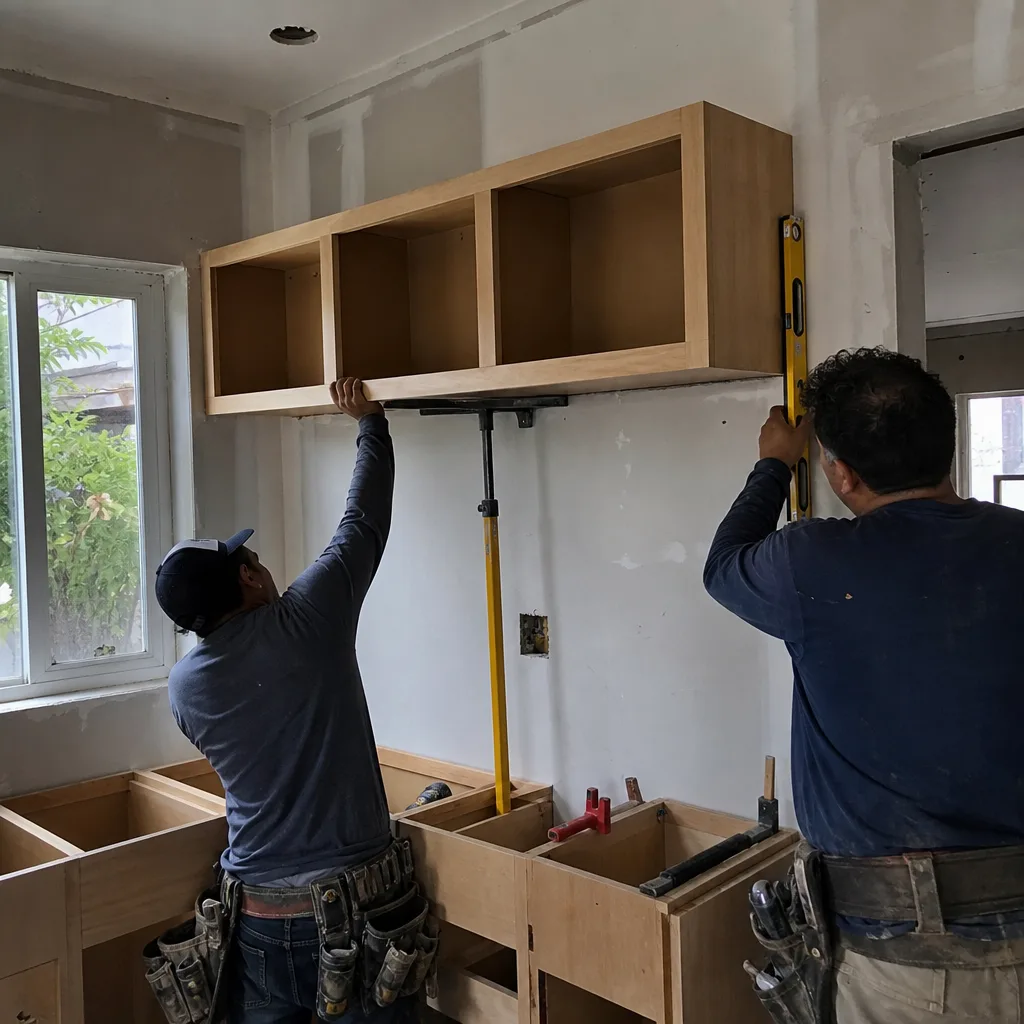
Most contractor workmanship warranties run one year. The 365-day inspection is your last chance to identify and document installation-related defects before that coverage expires. In California, SB 800 extends certain protections beyond one year, but the burden of proof shifts - early documentation is decisive.
Comprehensive Photographic Record
Retake every photo from your 30-day documentation in identical positions and lighting. Side-by-side comparison reveals changes that gradual exposure hides. Pay particular attention to:
- Grout color shift - uniform yellowing may be normal; patchy change indicates water intrusion or cleaning chemical reaction
- Silicone bead integrity - any separation, shrinkage, or hardening
- Cabinet face alignment - doors that have twisted or cupped
- Countertop luster - etching on marble, dulling on quartz from improper cleaners, heat marks near cooking zones
Functional Testing of All Systems
Operate every drawer, door, hinge, slide, and lift mechanism. Listen for changes from 90-day operation - new clicks, squeaks, or binding indicate wear patterns that need correction. Test all electrical outlets in the kitchen island and peninsula; GFCI outlets can fail silently, and countertop outlets see heavy use from small appliances.
Plumbing Stress Test
Fill every sink to overflow level and drain simultaneously. This tests drain capacity and vent function under load. Run the dishwasher through a heavy cycle while the sink drains - shared drain lines can show restriction only under combined flow. Check the garbage disposer for vibration increase, which indicates mounting looseness or blade wear.
Written Defect Notice Preparation
If you identify any condition that appears installation-related, prepare a written notice with:
- Dated photos from 30, 90, 180 days, and current
- Written description of the defect and its apparent cause
- Request for repair under warranty, with reasonable response timeframe
- Delivery by certified mail or email with read receipt
California law requires builders to respond within 30 days of written notice. Preserve your delivery confirmation. This documentation discipline is what we apply internally with our 365-Day Done Right Promise - every claim gets a ticket number, photo record, and resolution timeline.
Material-Specific Care for Common Mission Viejo Finishes
Mission Viejo’s kitchen market skews toward specific material combinations: painted MDF cabinetry in white and gray tones, engineered quartz countertops in marble-look patterns, LVP flooring for its pet and moisture resilience, and undermount stainless sinks with Grohe or Kohler pull-down faucets. Each has maintenance requirements that generic “kitchen care” advice misses.
Painted MDF Cabinet Doors
Medium-density fiberboard with a painted finish is dimensionally stable but edge-sensitive. The paint film at door edges is thin from factory sanding; moisture penetration here causes the MDF to swell, creating a permanent defect. Maintenance:
- Wipe spills immediately - MDF is not water-resistant at edges
- Avoid hanging wet towels over door fronts
- Clean with mild detergent only; ammonia-based cleaners soften acrylic paint films over time
- Never use Magic Eraser or similar abrasives - they remove gloss and eventually expose primer
The 90-day hinge adjustment is critical for painted MDF. A dragging door edge loses its finish in weeks, and touch-up paint never matches factory application exactly.
Engineered Quartz (Cambria, Caesarstone, Silestone)
Quartz is 93% ground natural stone bound with resin. It does not require - and must not receive - stone sealer. Sealer residue bonds to the resin matrix, creating a hazy film that requires professional refinishing to remove. The warranty specifically excludes damage from improper maintenance products.
Clean with pH-neutral cleaner or simple dish soap. Avoid:
- Oven cleaner, drain cleaner, or other high-pH products
- Acetone, nail polish remover, or other solvents that attack resin
- Abrasive powders that scratch the polish
- Prolonged heat exposure - use trivets; the resin can discolor above 300°F
Hard water in Mission Viejo can leave mineral deposits that resemble etching. These remove with a plastic scraper and vinegar solution - the brief acid contact does not harm properly cured quartz.
LVP Flooring Under Cabinetry
Luxury vinyl plank’s weakness is point loading and thermal stress from appliances. Dishwasher leaks, refrigerator condenser heat, and range radiant heat all affect LVP differently than tile or hardwood. Maintenance:
- Monitor refrigerator drip pan and water line connections quarterly
- Verify dishwasher leak sensor function if equipped
- Clean range subfloor vent if present - trapped heat accelerates wear layer degradation
- Maintain expansion gaps at all vertical obstructions, including island bases
LVP under cabinetry is permanent - it cannot be replaced without cabinet removal. Protect it proactively.
Undermount Sink Silicone Seals
The silicone bead between stainless or composite sink rim and countertop underside is the single most failure-prone element in modern kitchen installation. It is inaccessible for inspection without removing the sink or looking through the cabinet from below. At each inspection interval, check the cabinet floor for moisture, test the seal by filling the sink and checking for drips below, and monitor for musty odors that indicate slow leakage.
Sterling undermount sinks, common in spec-grade installations, have a thinner rim profile that requires more precise silicone application than heavier-gauge alternatives. Grohe and Kohler faucets with integrated pull-down sprays add hose weight that stresses the sink mounting over time - verify clip tightness annually.
Mission Viejo Climate Considerations: Santa Ana Winds and Low Humidity
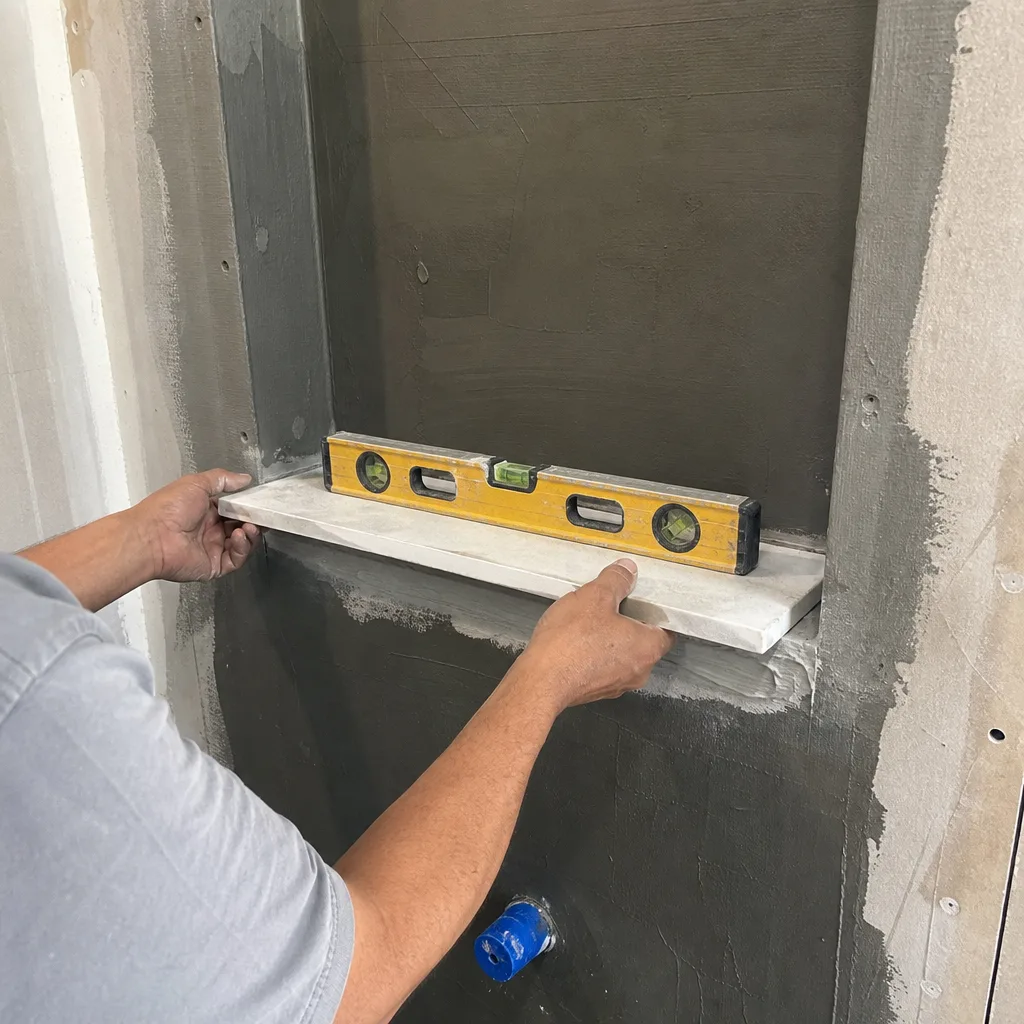
Mission Viejo sits inland enough to experience significant Santa Ana wind events, typically September through March, when relative humidity can drop below 20% for days. This affects kitchen materials in specific, predictable ways that coastal Orange County kitchens avoid.
Wood Cabinet Movement
Solid wood and wood-veneer cabinet components shrink in low humidity, opening joints and changing door reveals. Painted MDF is more stable dimensionally but can show hairline cracks at joints where different grain orientations meet. Monitor during Santa Ana events for:
- Drawer face gaps that appear or widen - typically 1/32 to 1/16 inch change
- Door reveals that become uneven top-to-bottom
- Cracking at miter joints in decorative molding
- Panel rattling in frame-and-panel doors as the panel shrinks
These changes typically reverse when humidity returns. Persistent gaps indicate a structural issue, not seasonal movement. We document baseline reveal measurements at project completion so homeowners have reference points.
Countertop and Backsplash Stress
Quartz and solid-surface materials expand and contract less than natural stone, but the cabinets and walls they sit on move more. This differential movement stresses caulk joints and can propagate existing grout cracks. The Santa Ana season is when latent installation defects often reveal themselves.
Mitigation Strategies
Maintain indoor relative humidity between 35% and 50% during dry periods. Whole-house humidification is ideal; portable units in the kitchen help. Avoid directing HVAC supply vents directly at cabinet runs - the localized drying accelerates movement. If your kitchen has a south or west exposure, solar gain through windows can create hot spots with locally low humidity even when the house overall is comfortable.
How to Document Defects to Preserve Warranty Claims
California’s Right to Repair Act (SB 800) creates a structured process for construction defect claims, but the homeowner’s documentation burden is real. Contractors respond to evidence, not complaints. Here’s the process we recommend based on our experience on both sides of warranty discussions.
The Photo Record Standard
Every photo needs context to be admissible. Include in each frame or in the filename:
- Date and time stamp - camera metadata is acceptable if preserved
- General location - “kitchen island east face,” not “counter”
- Scale reference - a coin, ruler, or known object
- Overall context shot plus detail - the close-up alone is ambiguous
Our crews deliver this as standard on every visit - the documented photo record included with every Rowan project. Homeowners should maintain the same discipline for their own observations.
Written Notice Requirements
SB 800 requires “reasonable detail” in written defect notice. This means:
- Specific location of each defect
- Description of the condition and its apparent cause
- Reference to the applicable construction standard (CBC, manufacturer’s installation instructions, or contract specifications)
- Request for specific remedy
- Reasonable response deadline, typically 30 days
Email suffices if delivery is confirmed; certified mail provides stronger evidence. Keep copies of everything.
Timeline Preservation
The statute of limitations for construction defects in California is complex - varying by defect type, from 2 years for patent (visible) defects to 10 years for latent structural defects. However, contractor warranties are typically one year for workmanship, and manufacturer warranties vary by product. Early documentation preserves options across all these timelines.
Under Clause 1 of The Haven Standard, Rowan Construction Group Mission Viejo delivers a written price before any work starts and a written warranty with every project. Our 365-Day Done Right Promise is printed on every page, backed by a terms page, not an asterisk. If it is not done right, we make it right.
The HVAC Maintenance Tie-In: Range Hoods and Grease Migration
The range hood is the most neglected kitchen appliance and the most consequential for finish preservation. Inadequate capture efficiency allows grease-laden air to deposit on adjacent cabinets, countertops, and walls, degrading finishes and creating fire risk. This is particularly relevant in Mission Viejo’s open-plan kitchens, where the range may be island-mounted or adjacent to living spaces without physical separation.
Grease Filter Maintenance by Cooking Frequency
| Cooking Frequency | Filter Cleaning Interval | Replacement Interval |
|---|---|---|
| Daily, high-heat cooking | 2-4 weeks | Annually |
| Regular family cooking | 1-2 months | 18-24 months |
| Occasional, light cooking | 3-4 months | As needed |
Clean filters in hot water with degreasing dish soap; dishwasher cleaning is acceptable for stainless baffle filters but can degrade aluminum mesh over time. A clogged filter increases static pressure, reducing capture efficiency and forcing more grease past the filter.
Ductwork Inspection
The duct run from hood to exterior should be inspected annually for:
- Grease accumulation at joints and transitions - indicates leakage
- Damper function - the exterior damper should open fully and close completely
- Backdrafting - damper failure allows cold air and pests in
- Insulation integrity - uninsulated ducts in attic spaces condense grease, creating fire risk
We specify rigid metal duct with sealed joints for all range hood installations; flexible duct traps grease and creates turbulence that reduces flow.
Grease Damage to Cabinet Finishes
Grease film on painted MDF is initially invisible but attracts dust, creating a tacky residue. Over months, this film oxidizes and bonds to the paint, making removal impossible without finish damage. The area within 18 inches of the cooktop is highest risk. Regular cleaning with mild degreaser prevents accumulation; once bonded, refinishing is required.
This damage is not a defect - it is maintenance failure - and is excluded from all warranties. The prevention is simple: adequate hood capture, clean filters, and regular surface cleaning.
Common Mistakes to Avoid
- Applying stone sealer to quartz countertops. Cambria, Caesarstone, and other engineered quartz never needs sealing; sealer residue voids the warranty and requires professional refinishing to remove. We see this mistake weekly in Mission Viejo homes.
- Ignoring the 90-day cabinet adjustment window. Hinges and slides are designed to be adjusted as materials settle; skipping this adjustment allows misalignment to wear finishes and hardware permanently.
- Using Magic Eraser or abrasive cleansers on painted cabinets. These products remove gloss progressively, creating irreversible dull patches that catch light differently than surrounding areas.
- Caulking over old caulk rather than removing it. New silicone cannot bond to old silicone; the repair fails within months, trapping moisture behind a superficially intact bead.
- Neglecting range hood filters during Santa Ana season. Low humidity increases static electricity, which increases grease particle adhesion to surfaces; a clogged filter makes this worse precisely when windows are closed and HVAC recirculates air continuously.
- Failing to document defects before the one-year warranty expires. California’s extended protections exist, but the burden of proof increases dramatically after the initial warranty period; early documentation is decisive.
- Assuming LVP flooring is maintenance-free. The wear layer resists scratches but not point loading or thermal damage; appliance leaks and refrigerator condenser heat require active monitoring.
When to Call a Professional
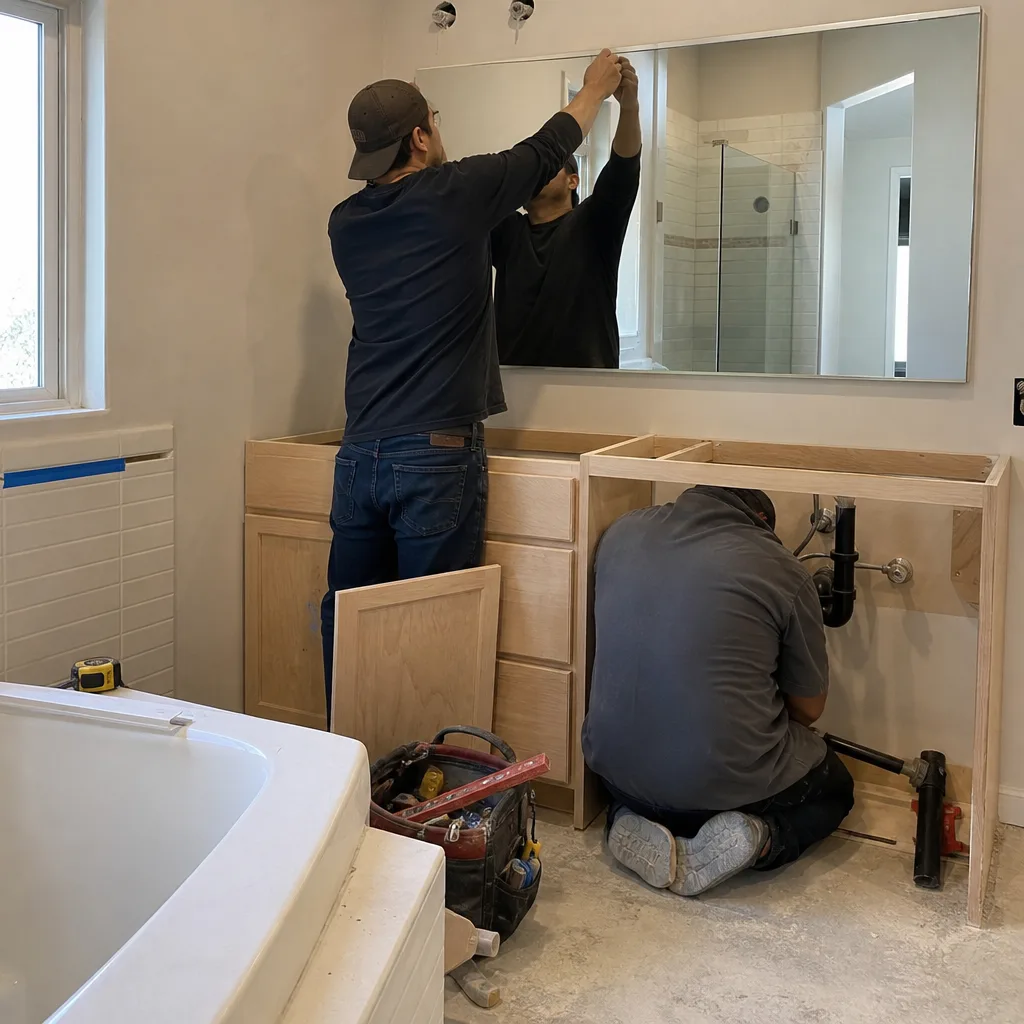
Some conditions indicate structural or systemic issues beyond homeowner maintenance. Contact a qualified contractor if you observe: cabinet face or door panel warping that does not reverse with humidity changes; countertop cracks or separations that extend through the material, not just surface scratches; persistent moisture in cabinet floors after plumbing inspection; grout cracking that follows a straight line across multiple tiles, indicating substrate movement; or electrical issues including GFCI trips, outlet heating, or fixture flickering. These may indicate installation defects, plumbing leaks within walls, or electrical code violations that require professional diagnosis and repair.
Kitchen Remodeling in Mission Viejo by Rowan Construction Group Mission Viejo includes a 365-Day Done Right Promise, documented photo record on every visit, and written warranty with every project. If you’re evaluating a condition you’re unsure about, we offer free estimates in Mission Viejo - call (657) 297-4635.
Frequently Asked Questions
A typical kitchen remodel in Mission Viejo ranges from $45,000 for a mid-range update with semi-custom cabinets and quartz countertops to $85,000-plus for full-gut renovations with layout changes and high-end finishes. The final price depends on cabinet line selection, countertop material and edge detail, appliance grade, and whether plumbing or electrical locations move. Rowan Construction Group Mission Viejo delivers a flat written price with scope and warranty before any work starts - call (657) 297-4635 for an exact quote; estimates are free.
No - under Clause 1 of The Haven Standard, the written price is fixed. No work proceeds on a change until the change order is signed. This administrative discipline is why Rowan’s projects finish within a few percent of the agreed cost across 4,000-plus jobs since 2007. If you have a competitor’s quote, we offer a Free Second Opinion - we’ll review it line by line at no charge.
Yes - all work requiring permit under the California Building Code is permitted and inspected. This includes electrical panel upgrades, gas line modifications, structural changes, and window or door alterations. The permit record protects your resale value and ensures code compliance. We handle permit application, scheduling, and inspection attendance as part of project management.
A typical Mission Viejo kitchen remodel runs 6 to 10 weeks from demolition to final walkthrough, depending on material lead times and inspection scheduling. Custom cabinetry extends this timeline; stock or semi-custom lines with reliable availability compress it. We provide a written schedule with milestones before work begins, updated weekly with any changes.
Document with dated photos in consistent lighting, then send written notice to your contractor with specific defect locations and descriptions. California’s SB 800 gives builders 30 days to respond to written claims. Preserve your delivery confirmation. If the contractor is unresponsive, consult a construction defect attorney before the applicable statute of limitations expires.
We do not offer standalone maintenance contracts, but our 365-Day Done Right Promise covers workmanship defects, and we respond to warranty claims with ticketed service calls including documented photo records. For routine maintenance, we provide this checklist and are available by phone for guidance. For kitchens we did not remodel, we offer paid service calls for diagnosis and repair - call (657) 297-4635 to schedule.
The Bottom Line

A kitchen remodel in Mission Viejo represents a significant investment in your home’s function and value. The first 18 months after installation determine whether that investment appreciates or depreciates. The maintenance checklist is straightforward: verify grout and silicone at 30 days, adjust hardware at 90 days, inspect comprehensively at 180 days, and document everything before the one-year warranty expires. Material-specific care - no sealer on quartz, no abrasives on painted MDF, active range hood maintenance - prevents the damage that generic advice misses. Climate awareness during Santa Ana wind season protects against the wood movement that low humidity triggers. And disciplined documentation preserves your rights under California law. The contractors who built your kitchen have obligations; you have the power to enforce them with evidence.
Written by Grant Rowan, Owner at Rowan Construction Group Mission Viejo, serving Mission Viejo since 2007.