
Free written scope consultation - allowances, timeline, and change-order rules on paper before a single trade is scheduled

 Before
 After
After Before
 After
After Before
 After
AfterJames Hardie Bathroom Remodeling: The Mission Viejo Owner’s Guide
James Hardie bathroom remodeling in Mission Viejo typically runs $9,000-$28,000 for a full installation, and we stock the full HardieBacker cement board line along with ColorPlus trim and flashing on our trucks. Most Mission Viejo homeowners discover their cement board substrate has failed when tile cracks along shower walls or grout lines open up after the seasonal expansion cycles of our inland heat. If you’re seeing soft spots behind the tile or a musty smell that doesn’t clear with ventilation, the backer board is likely the culprit.
Which James Hardie Models This Applies To
We work with the complete HardieBacker series: 500 (1/2″ for walls), 1/4″ for floors, and the newer HardieBacker Pro for steam shower builds that require a higher density core. The product line changed in 2019, so if your bathroom was remodeled between 2005 and 2018, you’re likely looking at the original gray-core board stamped with the old James Hardie logo rather than the current blue-and-white label.
Here’s the compatibility gotcha we run into in Mission Viejo’s older tracts like Casta del Sol: some installers used generic cement board with Hardie trim, and the expansion coefficients don’t match. The HardieBacker 500 expands at 0.015% per degree Fahrenheit, while generic boards run closer to 0.025%. In a Mission Viejo summer, that difference cracks grout in two to three years. We verify by checking the board edge stamp - Hardie prints the lot number and thickness on every sheet - and we match it to Hardie’s published spec sheets before we quote.
OEM HardieBacker versus aftermarket? For wet-area walls, we spec OEM. The proprietary cement composite and glass-fiber mesh layering is what gives Hardie its 90-day water-immersion rating. Aftermarket cement boards meet ASTM C1325 but rarely match the density, which matters when you’re hanging subway tile on a shower ceiling in a Painted Trails home with the original 1980s framing.
Signs Your James Hardie Bathroom Remodeling Is Failing
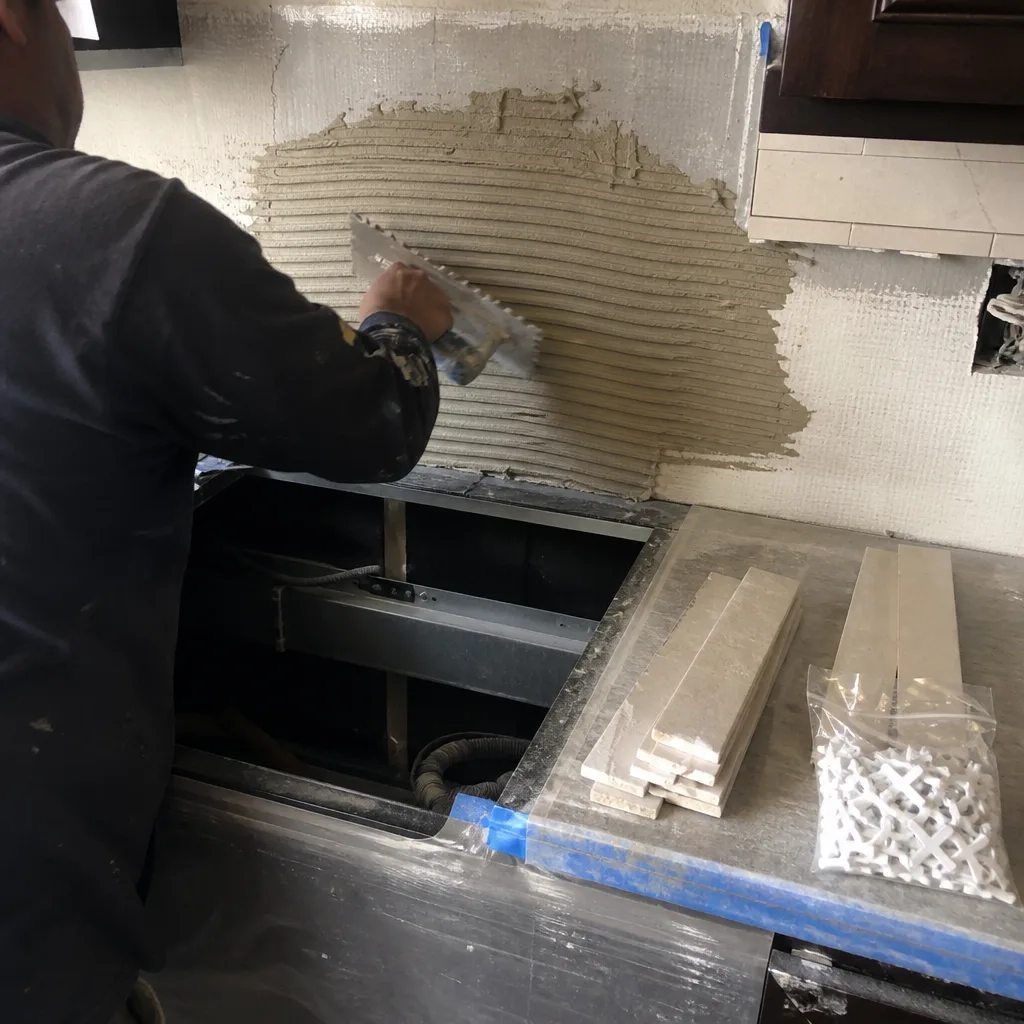
- Tile cracks in straight lines along grout joints. This usually means the HardieBacker panel underneath has delaminated from the studs, often because the original installer missed the stud with a fastener or used drywall screws instead of Hardie’s specified corrosion-resistant roofing nails. The panel flexes, the grout doesn’t, and the crack follows the stress line.
- Soft, spongy areas behind wall tile, especially near the shower valve. Water has breached the grout or caulk and saturated the cement board. HardieBacker is mold-resistant but not waterproof - without a proper liquid membrane or sheet membrane on top, it wicks moisture to the framing. In Mission Viejo’s dry climate, this damage often goes undetected until it’s extensive.
- Musty odor that persists after cleaning and running the exhaust fan. The cement board itself doesn’t grow mold, but the wood framing behind it does once the board reaches saturation. We’ve pulled HardieBacker in Mission Viejo bathrooms where the back side was dry to the touch but the stud bay held standing water from a slow valve leak.
- Floor tile “popping” or sounding hollow when tapped. The 1/4″ HardieBacker underlayment has separated from the subfloor, usually due to inadequate thinset coverage - the ANSI standard calls for 80% coverage in dry areas and 95% in wet areas, and we regularly find 40% in failed jobs.
- Discoloration or efflorescence (white powder) on grout lines. Minerals are migrating through the cement board from behind, which means moisture is moving through the assembly. This indicates either a missing vapor barrier on the warm side or a failed shower pan that the HardieBacker is now wicking from.
 Before
 After
AfterReplacement Cost & What’s Included
A full James Hardie bathroom remodel in Mission Viejo runs $9,000-$28,000, with the final number driven by three factors: square footage, whether we’re opening walls to replace failed backer board (not just surfacing), and the finish level of tile and fixtures you select. A smaller guest bath with HardieBacker replacement, standard subway tile, and a basic vanity typically lands near the bottom of that range. A master bath with curbless shower, HardieBacker Pro, heated floor, and stone tile pushes toward the upper end.
Our written quote itemizes every line: demolition and haul-away, new HardieBacker panels with specified fasteners, liquid membrane or sheet membrane application (your choice, priced separately), tile setting with specified grout, and fixture installation. Under Clause 1 of the Haven Standard, that price is fixed before anyone picks up a tool. No change order moves without your signature, which is the discipline that has kept our projects within a few percent of the agreed number since 2007.
The 365-Day Done Right Promise covers the full installation, not just the board. If a grout line opens or a tile sounds hollow in year one, we make it right.
DIY or Call Us?
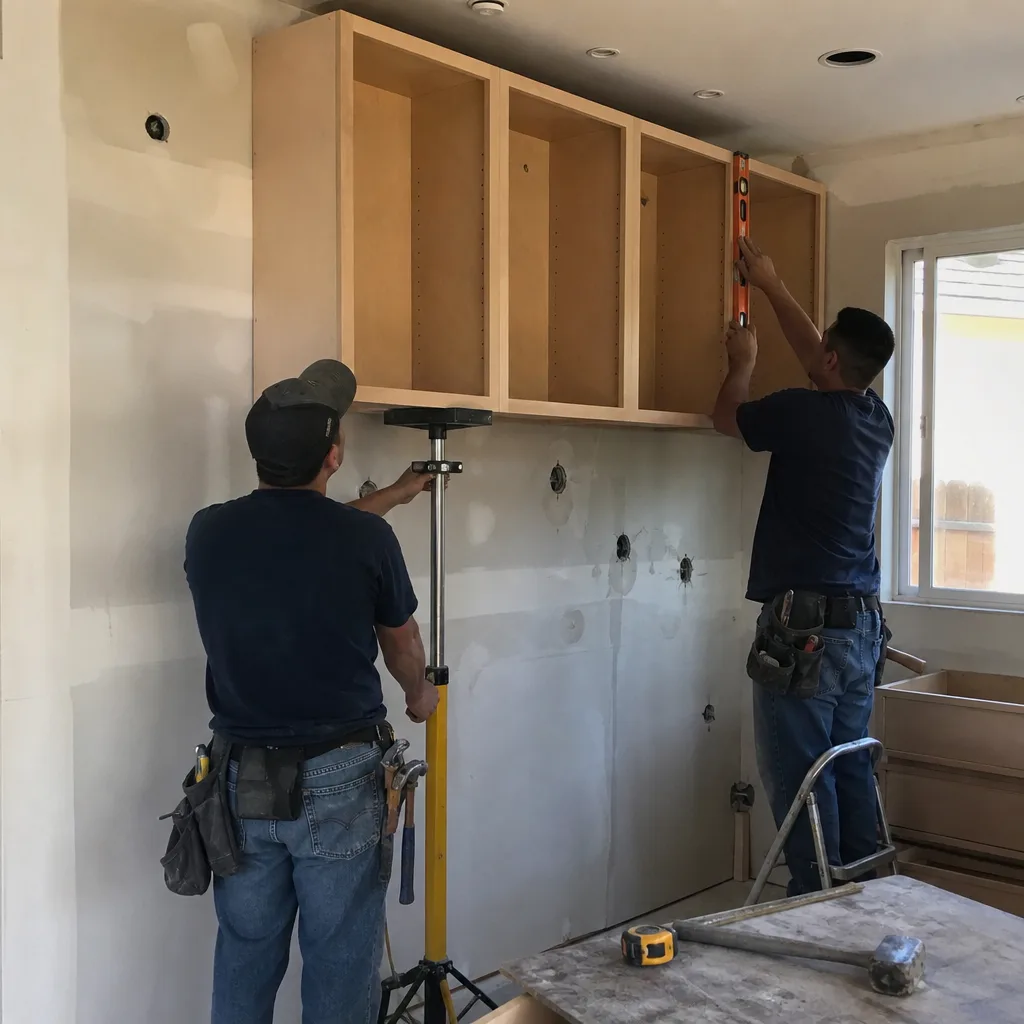
There’s a safe middle ground here. A homeowner can confirm the problem with a 3/16″ drill bit in an inconspicuous spot - if you pull fibrous cement dust and the bit doesn’t sink into mush, the board is likely sound. You can also check the fastener pattern with a magnet; Hardie specifies 8″ on-center in the field and 3/8″ from panel edges, and missing fasteners are visible if you know the layout.
Where DIY goes wrong is the membrane. Liquid membranes like RedGard or Hydro Ban require a specific mil thickness, verified with a wet-film gauge, and most homeowners don’t own one. Sheet membranes like Schluter-Kerdi need precise corner folds that fail if rushed. And once the tile is set, a mistake is a $3,000 re-demolition, not a do-over. The cement dust from cutting HardieBacker is silica-laden - NIOSH-rated respirators required, not a paper mask.
We carry HardieBacker 500, 1/4″ underlayment, and ColorPlus trim on the truck. For a written price before any work starts, call (657) 297-4635.
FAQs
Properly installed with a complete membrane system, HardieBacker exceeds 30 years in our climate. The failure point is almost never the board itself - it’s the membrane or fasteners that go first, accelerated by Mission Viejo’s 100-plus summer days and the thermal cycling of inland Orange County. Call (657) 297-4635 for an exact quote on your specific installation - estimates are free.
Localized damage can be patched if the surrounding board is dry, firmly attached, and the membrane can be feathered in per manufacturer spec. We don’t recommend patching within 12 inches of a shower pan or valve, since the moisture path is rarely visible. Our crew documents the full area with photos before recommending repair versus replacement. Call (657) 297-4635 and we’ll show you what we found.
A standard tub surround runs three to four days: demolition and drying day, board and membrane day, tile day, grout and cure day. A walk-in shower with HardieBacker Pro and linear drain adds a day for the pre-slope and pan. We don’t rush the cure - thinset and grout need 24 hours minimum, and “Measure twice, then measure again - the lumber yard doesn’t give refunds.” Call (657) 297-4635 to schedule.
We stock HardieBacker 500, 1/4″ underlayment, and ColorPlus trim on every bathroom truck. Specialty items like HardieBacker Pro or custom ColorPlus colors ship in 48 hours from the Fontana distribution center. We’re an independent service provider - not affiliated with James Hardie - but we’ve sourced from them since 2009 and spec their products when the job calls for cement board. Call (657) 297-4635 to confirm availability for your model.
Written by Grant Rowan, Owner, Rowan Construction Group Mission Viejo at Rowan Construction Group Mission Viejo, serving Mission Viejo and nearby areas.